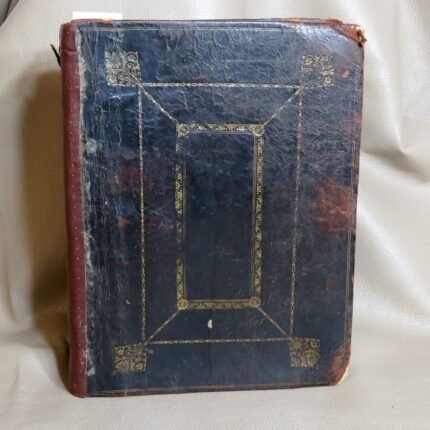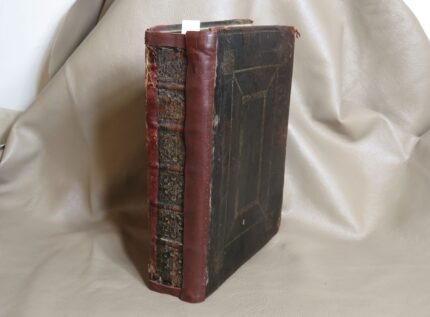

The Formula of Concord is a Lutheran confession of faith that was written in 1577. It was a response to divisions within the Lutheran Church and aimed to unify Lutheran beliefs and practices. In this webpage, we will explore the history and significance of The Formula of Concord and how it has influenced the Lutheran Church.

Background:

The Lutheran Church was formed during the Protestant Reformation in the 16th century. It faced many challenges, including divisions within the Church over matters of doctrine and practice. The Formula of Concord was written to address these issues and to provide a unified statement of faith for the Lutheran Church.

Summary:

The Formula of Concord is a document that affirms the Lutheran belief in the authority of the Bible as the sole source of Christian doctrine. It also clarifies the Lutheran position on several key theological issues, including predestination, the sacraments, and the relationship between the divine and human natures of Christ. The Formula of Concord emphasizes the importance of unity within the Church and the need to resolve theological disputes through biblical study and prayer.

Key Points:

  • The Formula of Concord was written in 1577 to address divisions within the Lutheran Church.
  • It affirms the Lutheran belief in the authority of the Bible as the sole source of Christian doctrine.
  • The document clarifies the Lutheran position on several key theological issues, including predestination, the sacraments, and the relationship between the divine and human natures of Christ.
  • The Formula of Concord emphasizes the importance of unity within the Church and the need to resolve theological disputes through biblical study and prayer.

Conclusion:

The Formula of Concord is an important document in the history of the Lutheran Church. It helped to unify the Church and clarify its beliefs and practices. The document emphasizes the importance of the authority of the Bible and the need for unity within the Church. The Formula of Concord continues to be an important confession of faith for the Lutheran Church and for those interested in the history of Christianity. It reminds us of the importance of seeking unity and understanding within the Church and of relying on the authority of the Bible in our study and interpretation of Christian doctrine.

New Item !

Protected: Bible Rebinding Package Special

Price range: $295.00 through $380.00

Small Bibles 7.5” or Less are 295.00.
Medium M 8.75” or Less are 325.00.
Large 9.75” or Less are 350.00.
XL 9.75″ or Larger are 380.00

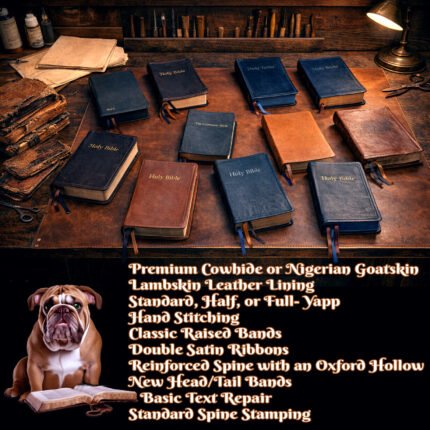
What comes standard in this package special?

    • Cover Leather of Your Choice: Premium Cowhide or Nigerian Goatskin
    • Lambskin Leather Liner
    • Standard, Half, or Full-Yapp
  • Hand Stitching
  • Classic Raised Bands
  • 10mm (approx. 3/8″) Double Satin Ribbons (up to 3)
  • Reinforced Spine with an Oxford Hollow
  • New Head/Bottom Bands
  • Basic Text Repair
  • Standard Spine Stamping
    • Includes:
    • “HOLY BIBLE”
    • Version Initials or Logo

Package is priced by Your Bible text Height.  Contact us if you have any questions.

To Order, Measure your Bible Text and the correct size below and then proceed. After clicking your correct size, you will see your package price appear.  Next click to “Choose Your Leather Type”, then click to “Choose Your Leather Color” and then click to “Choose Your Yapp Size”. 

You can then add any Add-on options and click “Add to Cart” or “Buy Now”.

Quick ViewSelect options This product has multiple variants. The options may be chosen on the product page

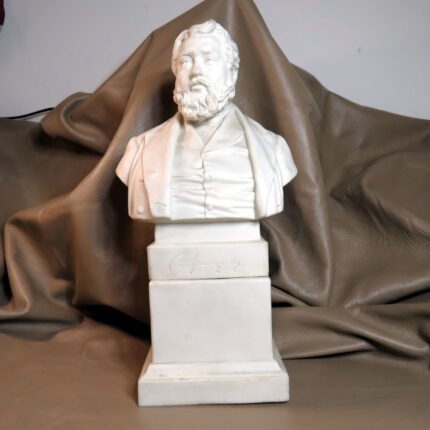
Charles H. Spurgeon Bust 12 inches tall Robinson Leadbeater Parian

$999.99

This is a truly magnificent and historically significant piece: an authentic, 12-inch tall Charles H. Spurgeon Bust, dating back to the height of the “Prince of Preachers'” fame. More than just a portrait, this is a tangible link to 19th-century religious and ceramic history, featuring an impressive array of original maker and copyright inscriptions.

See more information in description below:

Buy Now

Rare 1765 1st Ed: The Lives of John Wicliff and His Disciples by William Gilpin

$499.99

A Rare 1765 First Edition: The Lives of John Wicliff and His Disciples by William Gilpin

This is a significant and fascinating piece of 18th-century ecclesiastical history: The Lives of John Wicliff; and of the most Eminent of his disciples; Lord Cobham, John Huss, Jerome of Prague, and Zisca, written by William Gilpin, M.A., and printed in London in 1765. This work is a detailed biography of the great English theologian and reformer, John Wycliffe (often spelled Wicliff), and the central figures who carried on his religious and political legacy, often paying the ultimate price.

See more information below:

Buy Now

1595 Geneva Breeches Bible printed by Christopher Barker, Theo. Beza

$2,999.99

This 1595 Geneva Bible, printed by the deputies of Christopher Barker, is a quarto edition of the Geneva Bible, an important and influential version of the scriptures for late 16th-century Protestants. This 1595 version is a significant historical artifact that provides insight into the era’s religious, cultural, and publishing landscape.

See the description below for more info:

Buy Now

1654 pocket Bible OT imprinted by Evan Tyler for a Society of Stationers with brass clasps and red ruling

$999.99

This 1654 pocket Bible imprinted by Evan Tyler, for a Society of Stationers, with brass clasps and red ruling, is highly significant. The red ruling, in particular, points to the book’s high-quality and premium nature, underscoring the owner’s status and the personal value they placed on this object of daily devotion.

See description below for more information:

Buy Now

1659 LARGE Folio KJV FIELD BIBLE celebration of the Restoration of Charles II, RED RULED

$2,499.99

[THE HOLY BIBLE] Cambridge: John Field, 1659. Folio, 17.25″ x 11.25″. Wanting the engraved general title and coat of arms, and blank y4, else collates complete (see ESTC R36589.) Bound in full period marbled calf.

RED RULED – For a small percentage of Bibles, the borders and important parts of the text would be marked using a straightedge and red ink. Each page would be outlined by a scribe after printing, which was a very detail oriented and time-consuming practice. Red-ruling makes the text stand out, easier to read, and was a practice used by the very wealthy of the time.

The 1659 Field Bible, issued in celebration of the Restoration of Charles II, is a significant historical artifact. Although it is missing the engraved general title and coat of arms, as well as blank y4, it is otherwise complete and intact. This particular edition was published by John Field in Cambridge, 1659.

See more in description below:

Buy Now