
This is a five-volume set of Vulgate Bible commentaries published in Paris, France, in 1643. The title page attributes the work to Jean de la Haye (1593-1661), a French Franciscan preacher and biblical scholar who held important offices in the Franciscan Order and at the court of Louis XIII, and who is the author or editor of about forty folio volumes and several unpublished manuscripts. The listing presents La Haye as the editor and compiler of the set; the title page also attributes the commentary to him alongside five named commentators whose texts are quoted verbatim after each chapter: Gagnaeus, Estius, Manuel de Sa, Menochius, and Tirinus. The identity of a single author of the commentary text itself is uncertain; the listing does not name an original author of the commentaries, only that La Haye compiled them.
The set is organized so that the first three volumes cover the Old Testament and the last two cover the New Testament. This division is confirmed by the HathiTrust catalog record, which lists 613-852 pages for the Old Testament material and 853-1252 pages for the New Testament material, totaling approximately 880 pages in five folio volumes. The Catholic Encyclopedia (1913) corroborates that La Haye’s Biblia Magna quotes these five commentaries verbatim after every chapter, and it praises his methods as having wonderful assiduity and toil, noting that the twenty-four volumes of his combined work bear witness to his dedication.
The set was printed in Paris in 1643 by Michel Soly, Denys Bechet, Mathieu Guillemot, and Antoine Bertier. The listing describes the physical condition of all five volumes as good: the leather is cracked on the spines but all spines and boards are intact, all pages appear to be present, there may be a few loose pages, dog ears, small tears, small repairs, foxing, browning, and staining, and the text is described as crisp and clear. The listing states that the commentaries were designed principally for the use of priests and preachers, reflecting La Haye’s role as a pulpit orator and his work on other Franciscan commentaries.
La Haye’s editorial project was designed principally for the use of priests and preachers, and the five commentaries he quotes are the standard literal commentaries on the Vulgate used in the seventeenth century. Gagnaeus (Johannes Gagnaeus) was a Swiss Protestant scholar who produced one of the first systematic Latin commentaries on the Vulgate; Estius (Jacobus Estius) was a Lithuanian Jesuit known for his literal method; Manuel de Sa (Manuel de Sa) was a Portuguese Jesuit; Menochius (Giovanni Stefano Menochio) was an Italian Jesuit; and Tirinus (Jacobus Tirinus) was a French Jesuit. La Haye’s practice of quoting these commentaries verbatim after each chapter made the Vulgate accessible to preachers who needed a reliable, literal reference for sermon preparation. The Catholic Encyclopedia notes that the methods followed by the author have been pronounced excellent, and that the twenty-four volumes of his combined work bear witness to his dedication.
The 1643 Paris edition was part of a broader post-Sixto-Clementine effort to standardize and disseminate biblical scholarship across Europe. The involvement of multiple printers – Soly, Bechet, Guillemot, and Bertier – reflects the competitive publishing environment of mid-seventeenth-century Paris, where scholarly editions were often produced by small workshops rather than large state presses. Beyond the Biblia Magna, La Haye’s editorial career included major commentaries on the books of Genesis, Exodus, and Apocalypse, as well as works such as In Genesim, sive Arbor vitae concionatorum (4 volumes) and In Exodum, vel Concionatorum virga, percutiens peccatores (3 volumes). His project of bringing out all important works by Franciscan authors in a Bibliotheca Ordinis Minorum was not realized, but his two monumental commentaries remain the most significant legacy of his exegetical work.
The literal method employed by these commentaries was characteristic of seventeenth-century Catholic biblical scholarship, which sought to render the Latin text of the Vulgate with precision for use in preaching. The Vulgate, translated from the Septuagint by Saint Jerome in the late fourth century, had been the standard Bible text of the Western Church for over a millennium and served as the basis for all Catholic liturgical reading. La Haye’s decision to quote these commentaries verbatim after each chapter meant that preachers could follow a continuous chain of exegesis from the Vulgate text through the established literal tradition, without having to navigate the more interpretive methods of the allegorical and anagogical schools. This approach was particularly valued in the post-Tridentine period, when the Catholic Church sought to standardize biblical teaching and counter Protestant reinterpretations.
The Biblia Magna and its companion work the Biblia Maxima (19 volumes, Paris 1660) are La Haye’s two works of monumental importance. The Catholic Encyclopedia states that both will continue to be of invaluable service to the student of exegesis, and notes that in the Biblia Magna the author quotes verbatim the commentaries of Gagnaeus, Estius, Sa, Menochius, and Tirinus after every chapter. The methods followed by the author have been praised for their assiduity and toil, and the twenty-four volumes of his combined work bear witness to his dedication.
The set’s dimensions are approximately 15 3/4 inches in length by 10 inches in width by 2-3 inches in depth, with a shipping weight of about 35.5 pounds. The binding is board with leather books, and the condition is listed as used antique, good. The price on the listing is $1,900.00. The set’s physical appearance – large folio size, cracked leather spines, and intact boards – is consistent with a mid-seventeenth-century French scholarly edition intended for use by clergy rather than for display. These commentaries were intended to support the work of homilets and biblical scholars who needed reliable Latin references for sermon preparation in an era when the Vulgate remained the standard text of the Western Church.

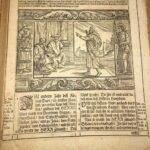
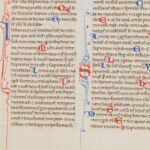
1643 Bible Magna Commentariorum Literalium 5 VOL Great Bible Literal Commentaries
$1,900.00
The Great Bible [ Biblia Magna ] Commentaries by Jean de la Haye.
This is a Vulgate Bible Commentary – published in five (5) volumes in Paris, 1643; the first three and last two volumes relate respectively to the Old and New Testaments. This Vulgate is the first Latin translation, from the Septuagint, dating from the 4th century. (century of the Edict of Milan) and attributed to Saint Jerome; said translation was the reference for a long time.
See more information Below:
In stock
You’re now subscribed to price tracking for this product. We’ll notify you if the price drops.
Track this item and get notified if the price drops.
Add to price trackerThis is a five-volume set of Vulgate Bible commentaries published in Paris, France, in 1643. The title page attributes the work to Jean de la Haye (1593-1661), a French Franciscan preacher and biblical scholar who held important offices in the Franciscan Order and at the court of Louis XIII, and who is the author or editor of about forty folio volumes and several unpublished manuscripts. The listing presents La Haye as the editor and compiler of the set; the title page also attributes the commentary to him alongside five named commentators whose texts are quoted verbatim after each chapter: Gagnaeus, Estius, Manuel de Sa, Menochius, and Tirinus. The identity of a single author of the commentary text itself is uncertain; the listing does not name an original author of the commentaries, only that La Haye compiled them.
The set is organized so that the first three volumes cover the Old Testament and the last two cover the New Testament. This division is confirmed by the HathiTrust catalog record, which lists 613-852 pages for the Old Testament material and 853-1252 pages for the New Testament material, totaling approximately 880 pages in five folio volumes. The Catholic Encyclopedia (1913) corroborates that La Haye’s Biblia Magna quotes these five commentaries verbatim after every chapter, and it praises his methods as having wonderful assiduity and toil, noting that the twenty-four volumes of his combined work bear witness to his dedication.
The set was printed in Paris in 1643 by Michel Soly, Denys Bechet, Mathieu Guillemot, and Antoine Bertier. The listing describes the physical condition of all five volumes as good: the leather is cracked on the spines but all spines and boards are intact, all pages appear to be present, there may be a few loose pages, dog ears, small tears, small repairs, foxing, browning, and staining, and the text is described as crisp and clear. The listing states that the commentaries were designed principally for the use of priests and preachers, reflecting La Haye’s role as a pulpit orator and his work on other Franciscan commentaries.
La Haye’s editorial project was designed principally for the use of priests and preachers, and the five commentaries he quotes are the standard literal commentaries on the Vulgate used in the seventeenth century. Gagnaeus (Johannes Gagnaeus) was a Swiss Protestant scholar who produced one of the first systematic Latin commentaries on the Vulgate; Estius (Jacobus Estius) was a Lithuanian Jesuit known for his literal method; Manuel de Sa (Manuel de Sa) was a Portuguese Jesuit; Menochius (Giovanni Stefano Menochio) was an Italian Jesuit; and Tirinus (Jacobus Tirinus) was a French Jesuit. La Haye’s practice of quoting these commentaries verbatim after each chapter made the Vulgate accessible to preachers who needed a reliable, literal reference for sermon preparation. The Catholic Encyclopedia notes that the methods followed by the author have been pronounced excellent, and that the twenty-four volumes of his combined work bear witness to his dedication.
The 1643 Paris edition was part of a broader post-Sixto-Clementine effort to standardize and disseminate biblical scholarship across Europe. The involvement of multiple printers – Soly, Bechet, Guillemot, and Bertier – reflects the competitive publishing environment of mid-seventeenth-century Paris, where scholarly editions were often produced by small workshops rather than large state presses. Beyond the Biblia Magna, La Haye’s editorial career included major commentaries on the books of Genesis, Exodus, and Apocalypse, as well as works such as In Genesim, sive Arbor vitae concionatorum (4 volumes) and In Exodum, vel Concionatorum virga, percutiens peccatores (3 volumes). His project of bringing out all important works by Franciscan authors in a Bibliotheca Ordinis Minorum was not realized, but his two monumental commentaries remain the most significant legacy of his exegetical work.
The literal method employed by these commentaries was characteristic of seventeenth-century Catholic biblical scholarship, which sought to render the Latin text of the Vulgate with precision for use in preaching. The Vulgate, translated from the Septuagint by Saint Jerome in the late fourth century, had been the standard Bible text of the Western Church for over a millennium and served as the basis for all Catholic liturgical reading. La Haye’s decision to quote these commentaries verbatim after each chapter meant that preachers could follow a continuous chain of exegesis from the Vulgate text through the established literal tradition, without having to navigate the more interpretive methods of the allegorical and anagogical schools. This approach was particularly valued in the post-Tridentine period, when the Catholic Church sought to standardize biblical teaching and counter Protestant reinterpretations.
The Biblia Magna and its companion work the Biblia Maxima (19 volumes, Paris 1660) are La Haye’s two works of monumental importance. The Catholic Encyclopedia states that both will continue to be of invaluable service to the student of exegesis, and notes that in the Biblia Magna the author quotes verbatim the commentaries of Gagnaeus, Estius, Sa, Menochius, and Tirinus after every chapter. The methods followed by the author have been praised for their assiduity and toil, and the twenty-four volumes of his combined work bear witness to his dedication.
The set’s dimensions are approximately 15 3/4 inches in length by 10 inches in width by 2-3 inches in depth, with a shipping weight of about 35.5 pounds. The binding is board with leather books, and the condition is listed as used antique, good. The price on the listing is $1,900.00. The set’s physical appearance – large folio size, cracked leather spines, and intact boards – is consistent with a mid-seventeenth-century French scholarly edition intended for use by clergy rather than for display. These commentaries were intended to support the work of homilets and biblical scholars who needed reliable Latin references for sermon preparation in an era when the Vulgate remained the standard text of the Western Church.
Shipping and Delivery
• How long will delivery take?
Orders are usually shipped within 3 business days. USPS Priority transit is typically 1–3 business days, so most U.S. orders arrive within 2–6 business days.
• How are shipping costs calculated?
Shipping is calculated at checkout based on product weight, dimensions, and destination. A USPS Priority Flat Rate option is available.
• Do you ship internationally?
Yes. International rates and delivery times vary by country. Customs duties and taxes are the recipient’s responsibility.
• Can I request signature on delivery?
Yes. Signature on delivery is available for high‑value items; select this option at checkout or contact us before shipping.
• Do you ship to PO Boxes and APO/FPO addresses?
We ship to PO Boxes and APO/FPO addresses when the selected USPS service supports it. Some services and signature options are not available to these addresses.
Note: Binding condition (original, rebacked, or binding copy) and presence of plates, maps, or family registers significantly affect value. Please look at all photos and read the entire description when evaluating a listing.
Related products
1615 GENEVA ENGLISH Breeches BIBLE printed in London by Robert Barker
1690 12mo King James “Her Bible” Black Morocco Leather OT & NT
1497 Incunabula Jerome Leaf Letters Epistole de San Hieronimo Vulgare RARE
1897 JC Ryle Expository Thoughts on the Gospels JOHN 3 Volumes
1670 German Luther Bible Leaf With a Woodcut Printed in Wittenberg Germany
Ancient AE Bronze Coin Crispus 317-326 AD
Antique print of Huldrych Zwingli (1484-1531) C. L. Meyers engraving from 1820.
1909 Bible Encyclopaedia & Scriptural Dictionary edited by Samuel Fowler