
The Westminster Larger Catechism is a Protestant catechism, or statement of faith, that was created by the Westminster Assembly in the 17th century. It is one of the most comprehensive and detailed catechisms in the Reformed tradition and provides a systematic overview of Christian doctrine.

History of the Westminster Larger Catechism

The Westminster Assembly, which also produced the Westminster Confession of Faith, was convened by the English Parliament in 1643 with the goal of redefining the Church of England in a more Protestant direction. The assembly consisted of over 100 divines, or theologians, from England and Scotland, and they worked together for six years to produce a comprehensive statement of faith.

The resulting document, the Westminster Larger Catechism, was completed in 1648 and adopted by the Church of Scotland in the same year. It has since been adopted by numerous Reformed churches around the world.

Structure and Content of the Westminster Larger Catechism

The Westminster Larger Catechism consists of 196 questions and answers, each of which provides a detailed explanation of a particular aspect of Christian doctrine. The questions are divided into 12 sections, each of which covers a specific topic, such as the nature of God, the fall of humanity, and the means of salvation.

The Westminster Larger Catechism is notable for its depth and detail. Each question is accompanied by a thorough explanation that draws on Scripture and the writings of theologians throughout history. The catechism also includes numerous Scripture references, making it a valuable resource for Bible study.

One of the defining features of the Westminster Larger Catechism is its emphasis on the practical implications of Christian doctrine. Many of the questions and answers address how believers are to live in light of their faith, emphasizing the importance of obedience and good works.

Impact and Influence of the Westminster Larger Catechism

The Westminster Larger Catechism has had a significant impact on the development of Reformed theology and on the Protestant church more broadly. Its detailed and systematic approach to Christian doctrine has influenced the teaching and preaching of countless pastors and theologians, and it continues to be an important resource for Christian education and discipleship.

The catechism has also been influential in shaping the worship and liturgy of many Reformed churches. Its emphasis on the practical implications of Christian doctrine has led many churches to incorporate catechism readings and teachings into their worship services, providing a rich and comprehensive understanding of Christian faith and practice.

Conclusion

In conclusion, the Westminster Larger Catechism is a significant statement of faith in the Reformed tradition. Its detailed and systematic approach to Christian doctrine has made it a valuable resource for Christian education and discipleship, and its emphasis on the practical implications of faith has influenced the worship and liturgy of many churches. Whether you are a student of theology or simply interested in deepening your understanding of Christian faith and practice, the Westminster Larger Catechism is a valuable resource that is worth exploring.
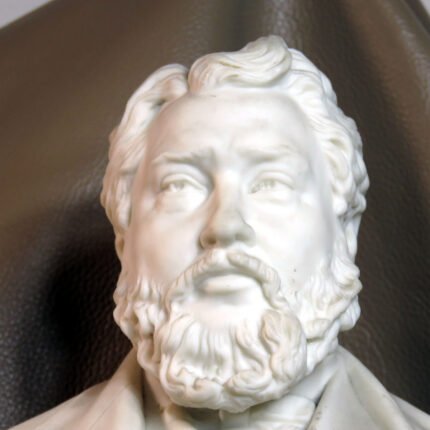
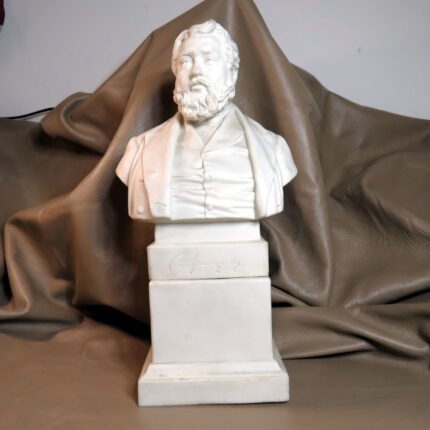
Charles H. Spurgeon Bust 12 inches tall Robinson Leadbeater Parian

$999.99

This is a truly magnificent and historically significant piece: an authentic, 12-inch tall Charles H. Spurgeon Bust, dating back to the height of the “Prince of Preachers'” fame. More than just a portrait, this is a tangible link to 19th-century religious and ceramic history, featuring an impressive array of original maker and copyright inscriptions.

See more information in description below:

Buy Now

Rare 1765 1st Ed: The Lives of John Wicliff and His Disciples by William Gilpin

$499.99

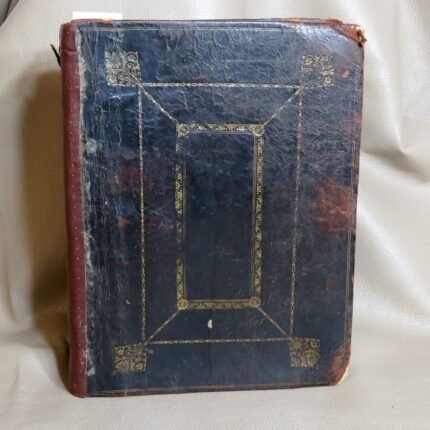
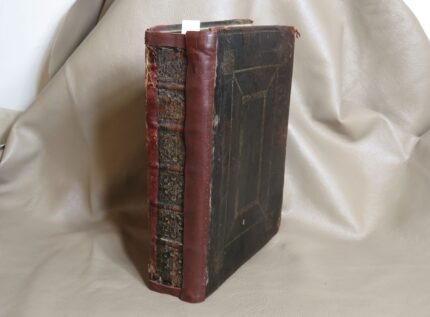
A Rare 1765 First Edition: The Lives of John Wicliff and His Disciples by William Gilpin

This is a significant and fascinating piece of 18th-century ecclesiastical history: The Lives of John Wicliff; and of the most Eminent of his disciples; Lord Cobham, John Huss, Jerome of Prague, and Zisca, written by William Gilpin, M.A., and printed in London in 1765. This work is a detailed biography of the great English theologian and reformer, John Wycliffe (often spelled Wicliff), and the central figures who carried on his religious and political legacy, often paying the ultimate price.

See more information below:

Buy Now

1595 Geneva Breeches Bible printed by Christopher Barker, Theo. Beza

$2,999.99

This 1595 Geneva Bible, printed by the deputies of Christopher Barker, is a quarto edition of the Geneva Bible, an important and influential version of the scriptures for late 16th-century Protestants. This 1595 version is a significant historical artifact that provides insight into the era’s religious, cultural, and publishing landscape.

See the description below for more info:

Buy Now

1654 pocket Bible OT imprinted by Evan Tyler for a Society of Stationers with brass clasps and red ruling

$999.99

This 1654 pocket Bible imprinted by Evan Tyler, for a Society of Stationers, with brass clasps and red ruling, is highly significant. The red ruling, in particular, points to the book’s high-quality and premium nature, underscoring the owner’s status and the personal value they placed on this object of daily devotion.

See description below for more information:

Buy Now

1659 LARGE Folio KJV FIELD BIBLE celebration of the Restoration of Charles II, RED RULED

$2,499.99

[THE HOLY BIBLE] Cambridge: John Field, 1659. Folio, 17.25″ x 11.25″. Wanting the engraved general title and coat of arms, and blank y4, else collates complete (see ESTC R36589.) Bound in full period marbled calf.

RED RULED – For a small percentage of Bibles, the borders and important parts of the text would be marked using a straightedge and red ink. Each page would be outlined by a scribe after printing, which was a very detail oriented and time-consuming practice. Red-ruling makes the text stand out, easier to read, and was a practice used by the very wealthy of the time.

The 1659 Field Bible, issued in celebration of the Restoration of Charles II, is a significant historical artifact. Although it is missing the engraved general title and coat of arms, as well as blank y4, it is otherwise complete and intact. This particular edition was published by John Field in Cambridge, 1659.

See more in description below:

Buy Now

1839 Presbyterian Church Case by Samuel Miller, Jr

$59.99

1839 Presbyterian Church Case by Samuel Miller, Jr

The Commonwealth of Pennsylvania, At the suggestion of James Todd and others, vs. Ashbel Green and others. Philadelphia: William S. Martien, 1839. First Edition.

Leather, approx. 9 1/4 x 6 inches.

Inscription on inside cover. 596 pp., foxing, binding tight.  Good condition.

See more information below:

Buy Now