
The Iconoclast’s Folio: A Curated Renaissance Anthology (1486–1622) Incunabula & Post-Incunabula
$11,500.00
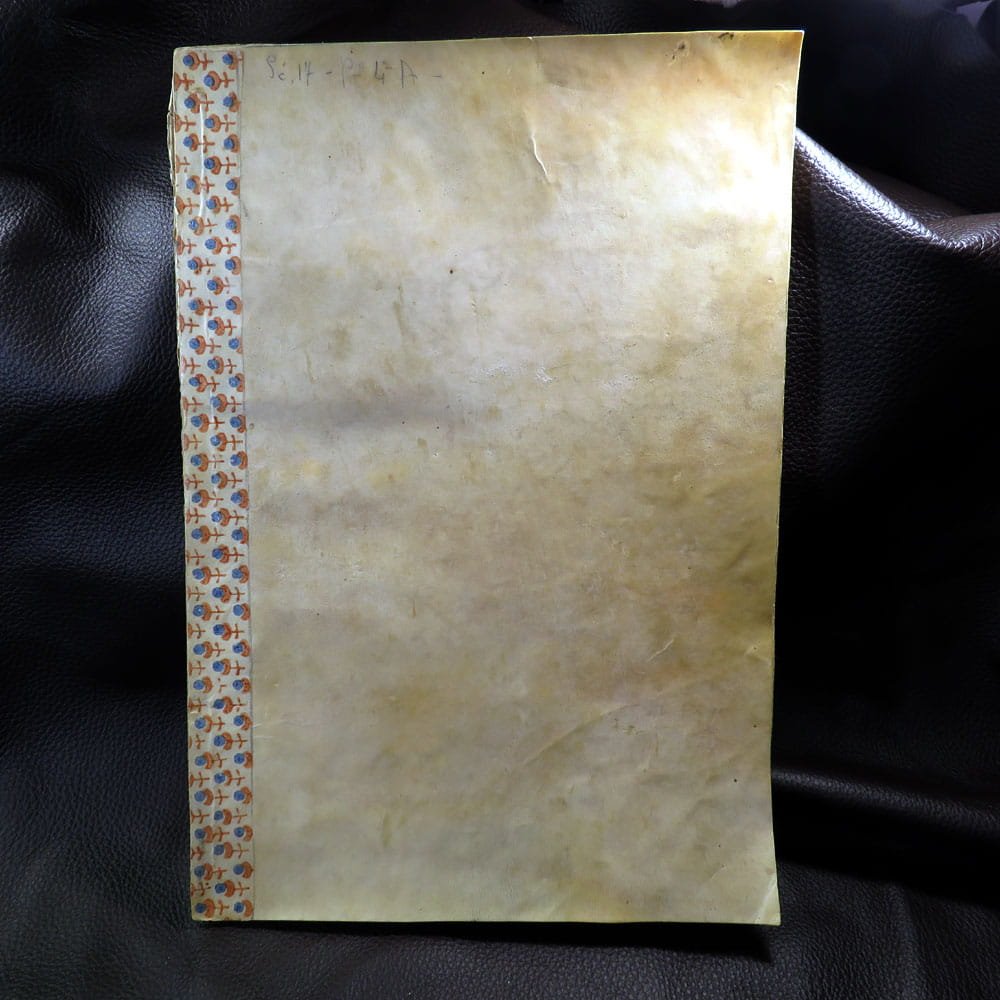
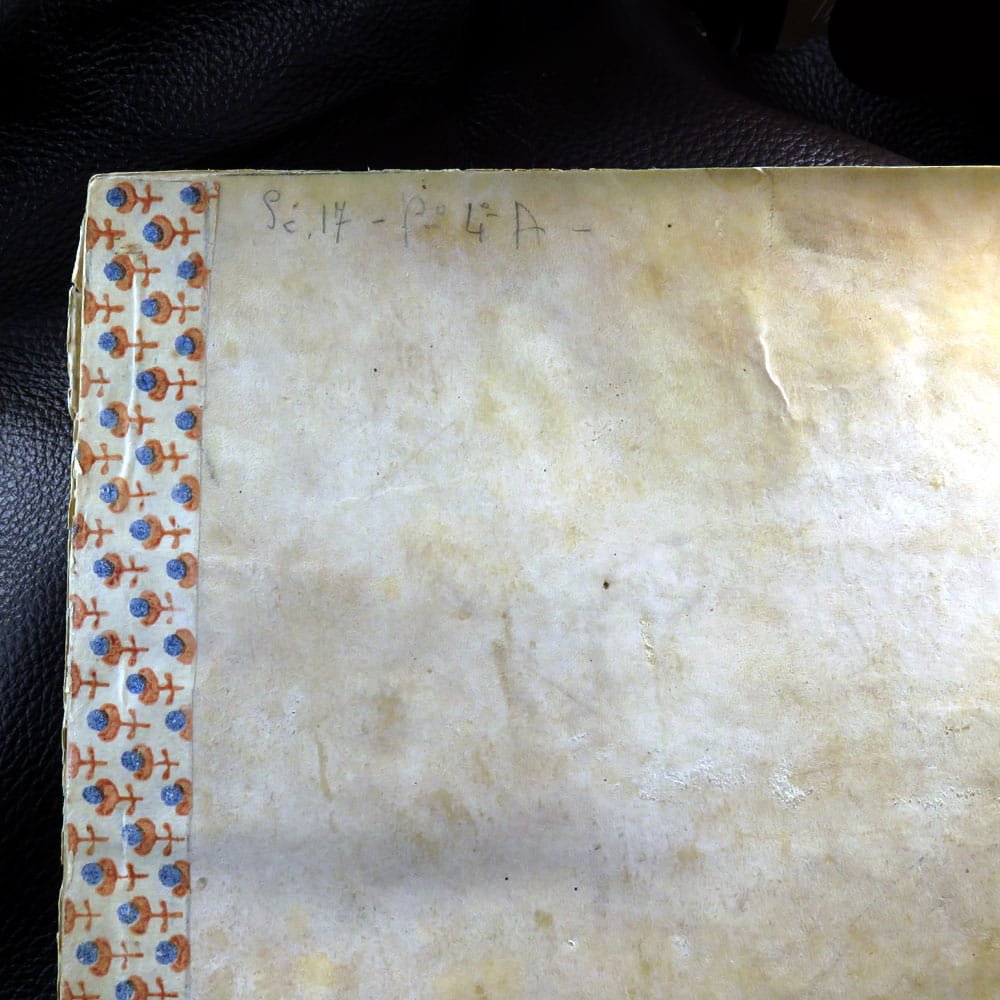
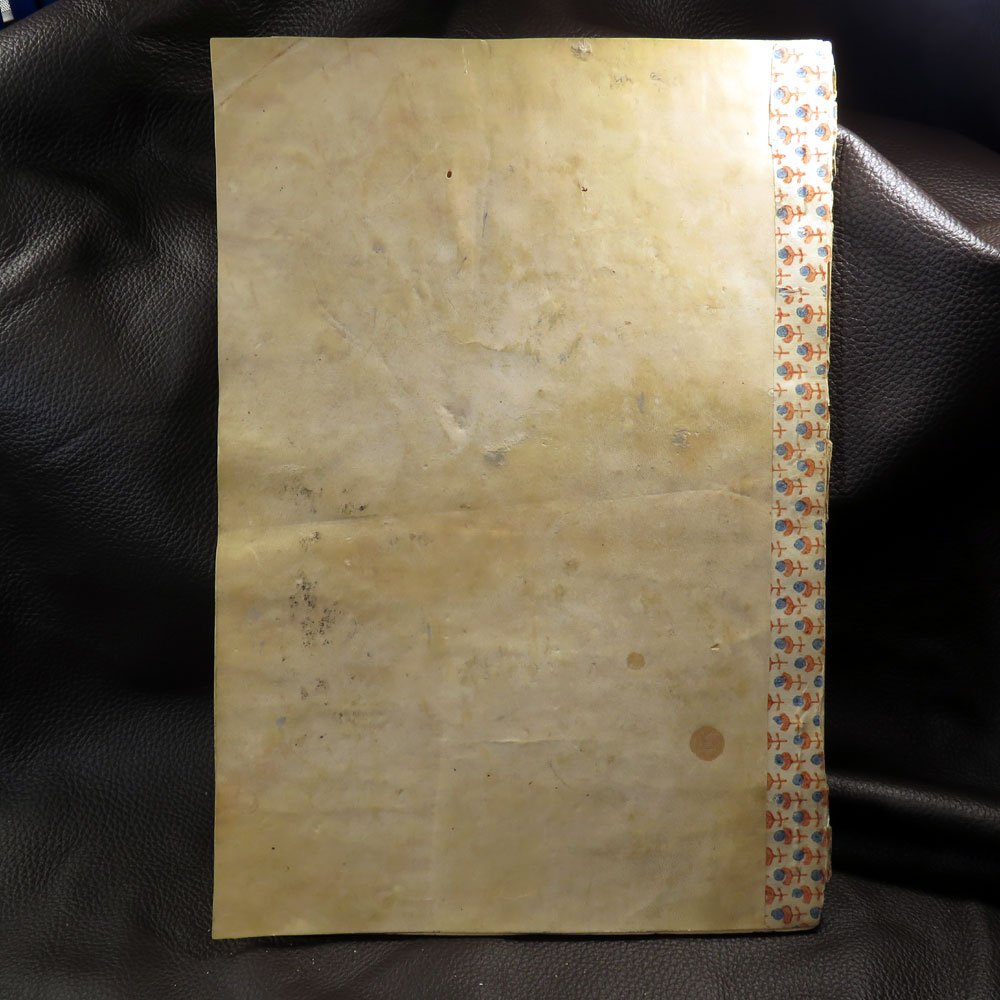
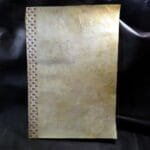
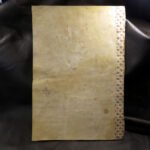
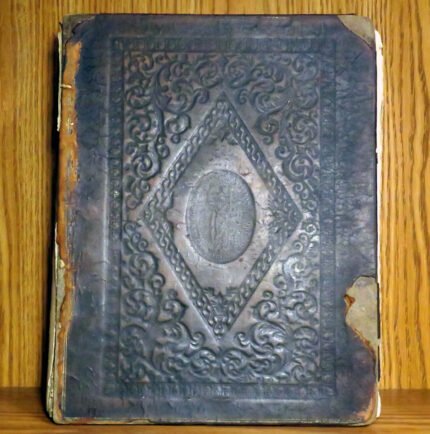
A curated antiquarian album consisting of fourteen (14) woodcuts from the Incunabula and Post-Incunabula periods (late 15th through early 17th century). The collection is housed in its historical early-to-mid 19th-century limp vellum binding with a polychrome printed paper spine.
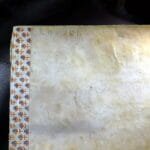
This album is preserved in its original “as found” condition. In accordance with the highest standards of archival stewardship, no modern stabilization or rebinding has been performed. The 19th-century hand-sewing remains intact, preserving the structural history of the “Iconoclast’s” curation. The vellum exhibits an honest, unrestored patina consistent with its two centuries of survival.
 Shipped fully insured
In stock
🔒 Safe & Secure Checkout



Subscription successful
You’re now subscribed to price tracking for this product. We’ll notify you if the price drops.
Description
An Intact 19th-Century Collector’s Album of 14 Incunabula & Post-Incunabula Woodcuts
Overview:
Offered here is a remarkable “Iconoclast’s Album”—a testament to the 19th-century passion for rescuing and preserving the “Cradle of Printing.” This folio serves as a portable museum, housing 14 meticulously selected woodcuts spanning nearly 150 years of European sacred art. From the dawn of the printing press in 15th-century Florence to the sophisticated Baroque mastery of the Roman school, this collection bridges the gap between the Medieval and the Modern.
Offered here is a remarkable “Iconoclast’s Album”—a testament to the 19th-century passion for rescuing and preserving the “Cradle of Printing.” This folio serves as a portable museum, housing 14 meticulously selected woodcuts spanning nearly 150 years of European sacred art. From the dawn of the printing press in 15th-century Florence to the sophisticated Baroque mastery of the Roman school, this collection bridges the gap between the Medieval and the Modern.
Primary Highlights:
-
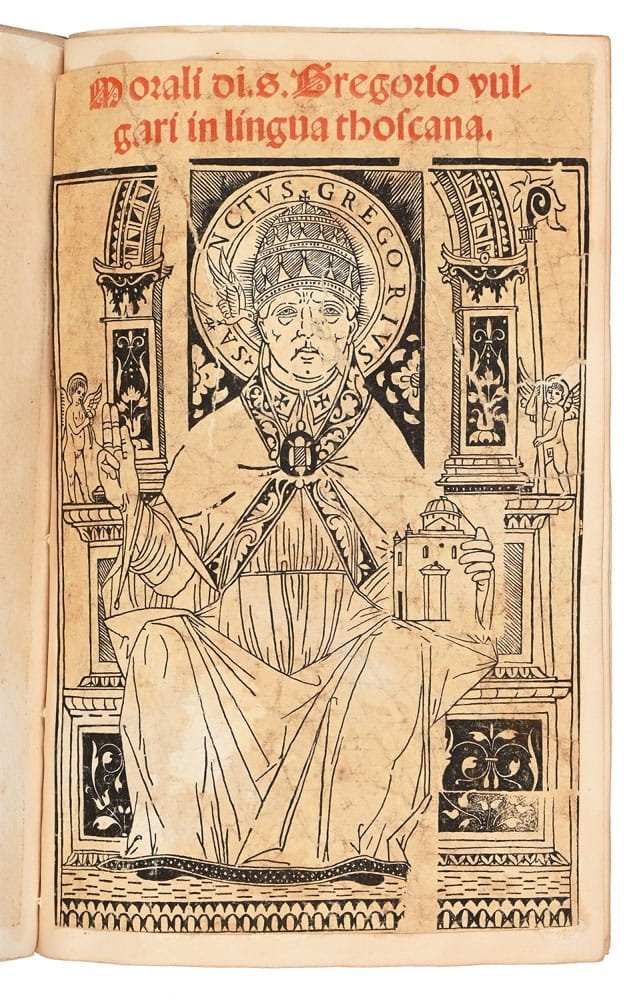
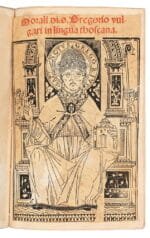
- The Florentine Incunabula (c. 1486): The cornerstone of this album is the rare title page from Morali di S. Gregorio vulgari in lingua toscana. Printed in Florence at the height of the Italian Renaissance, it features Pope Gregory I Enthroned, complete with original hand-rubrication. As an “Incunabula” (pre-1501), it represents the absolute infancy of movable type and woodblock illustration.
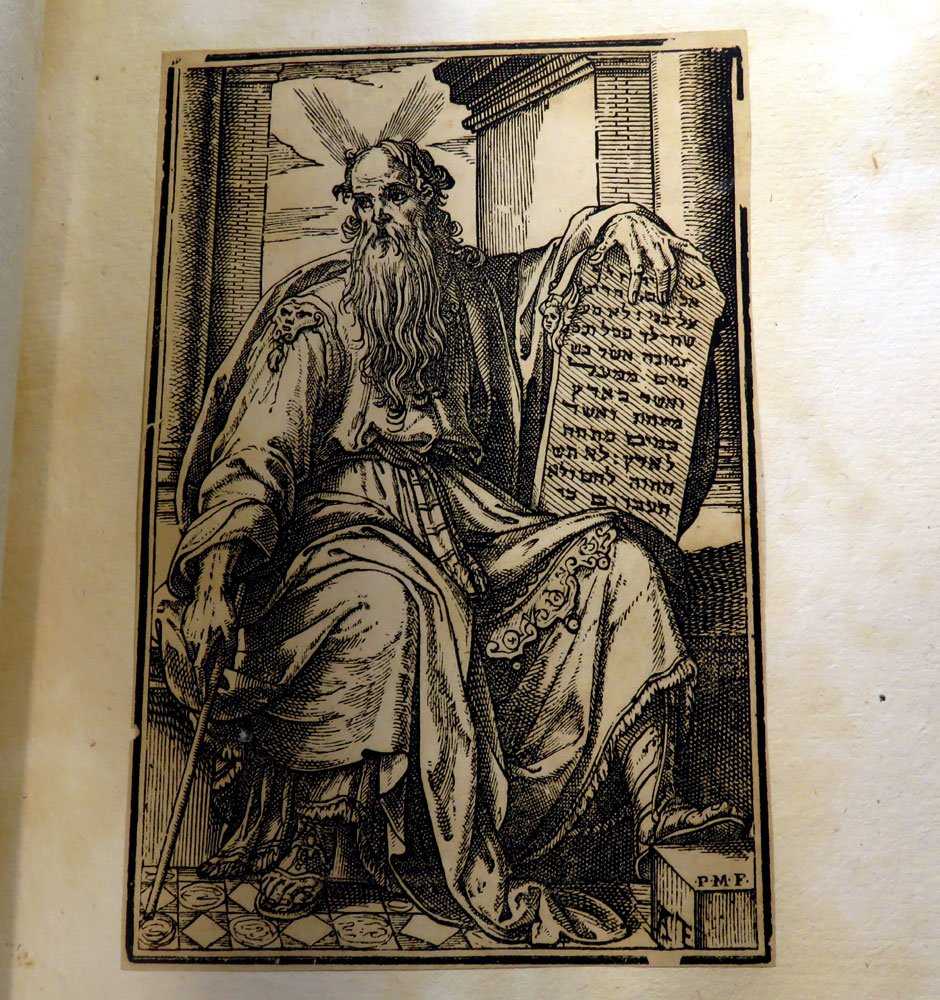
- The Baroque Mastery of Geronima Parasole (c. 1600-1622): A significant inclusion of Moses and the Ten Commandments, after Antonio Tempesta. Parasole was one of the few recognized female engravers of the 17th century; her work is held in the permanent collections of the British Museum and the Met. Her signature “P.M.F.” (Parasole Manu Fecit) marks this as a piece of significant art-historical importance.
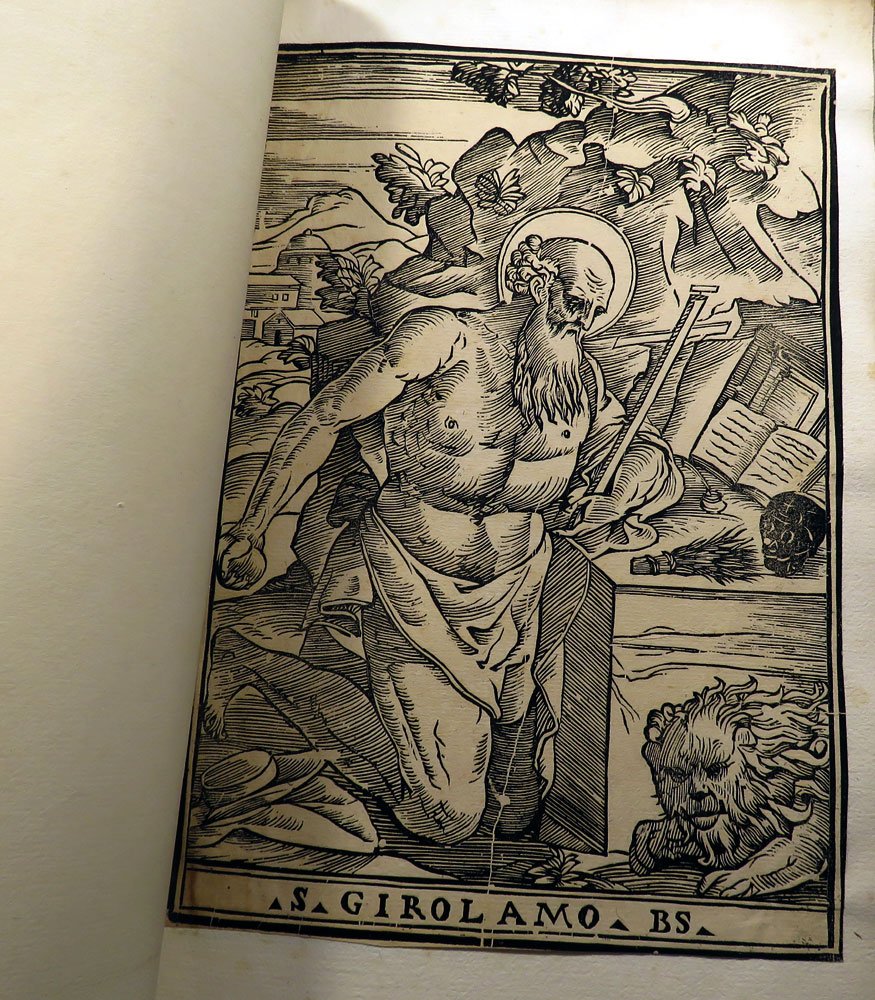
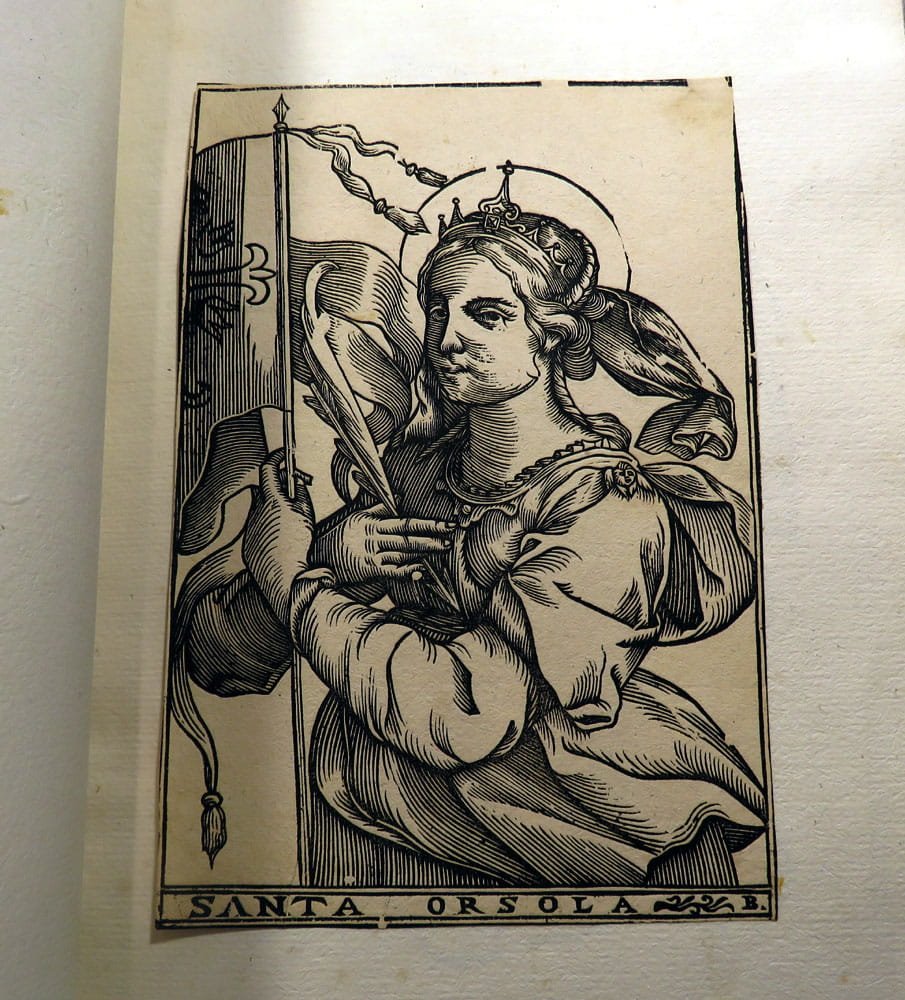
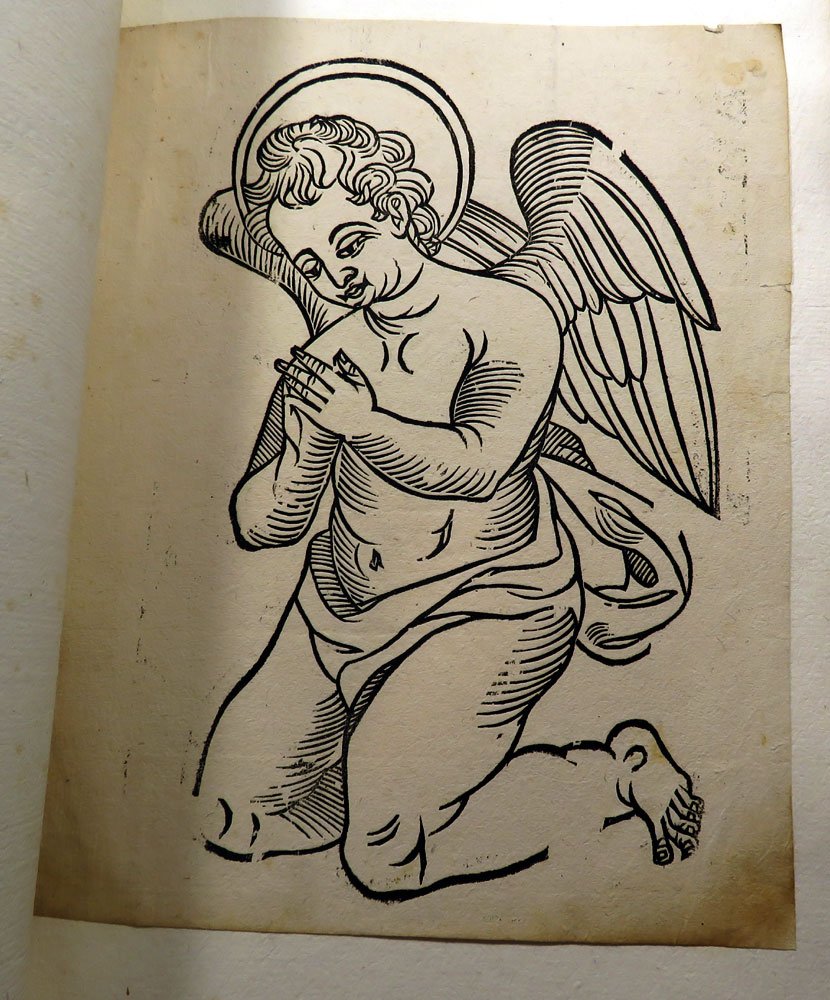
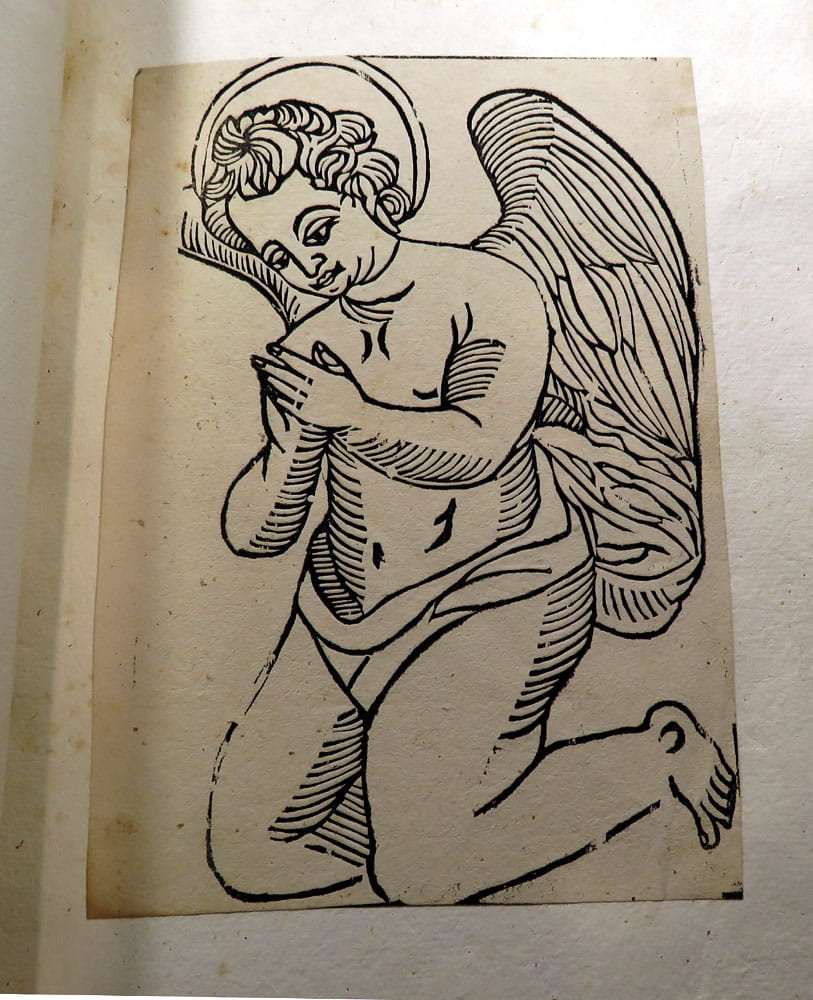
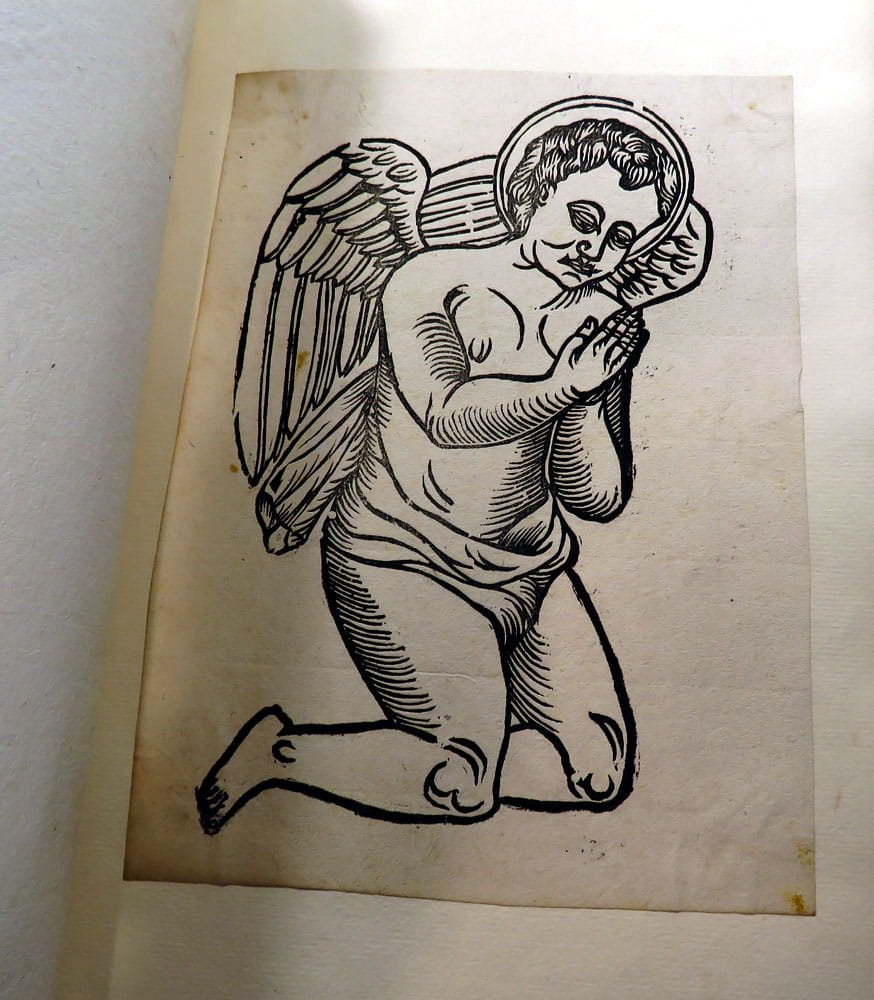
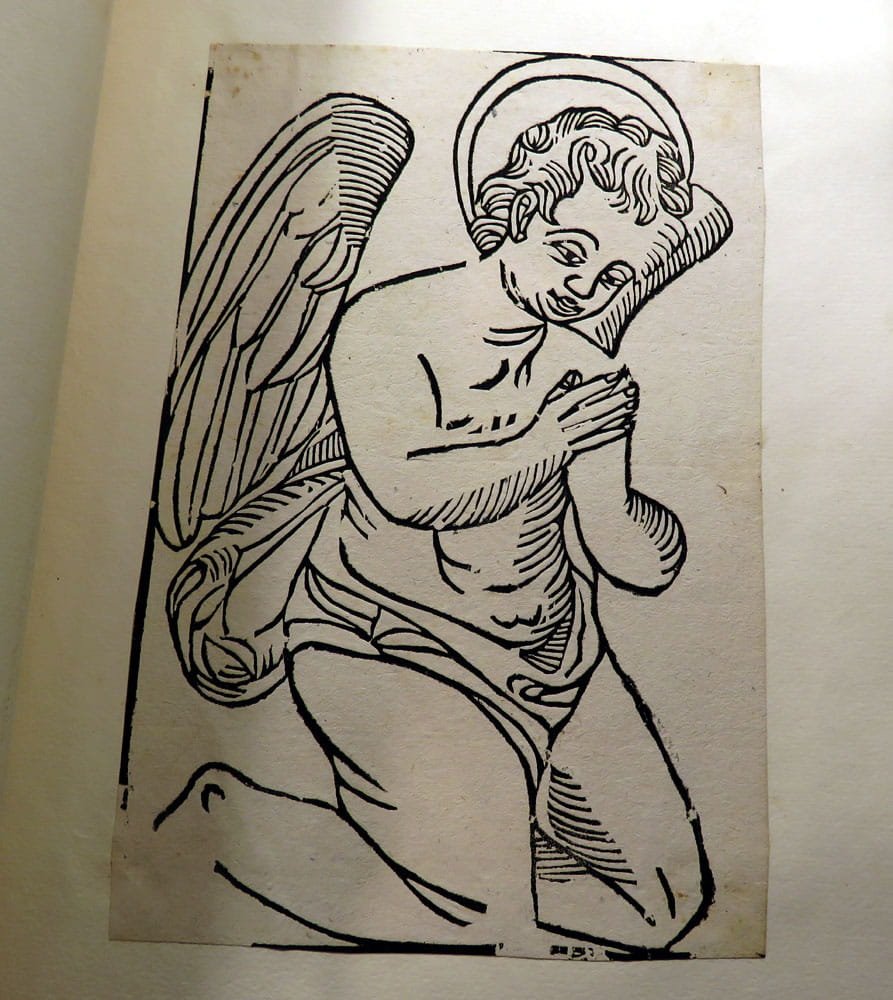
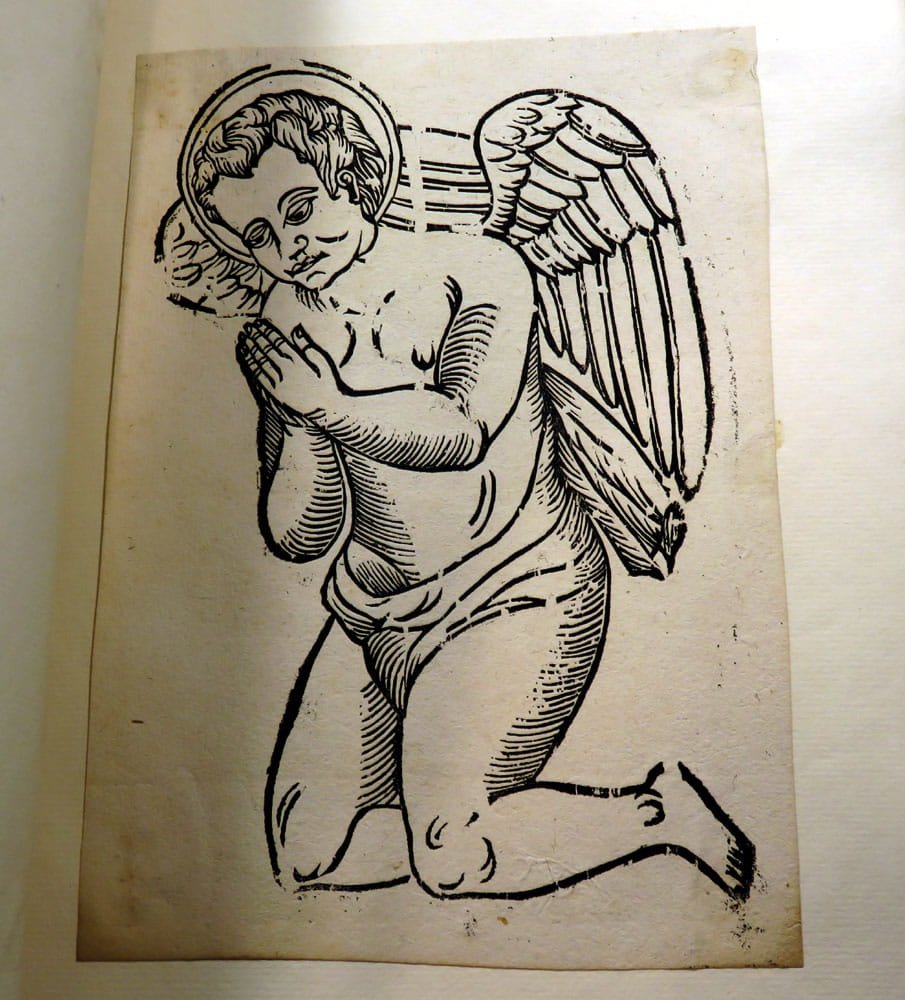
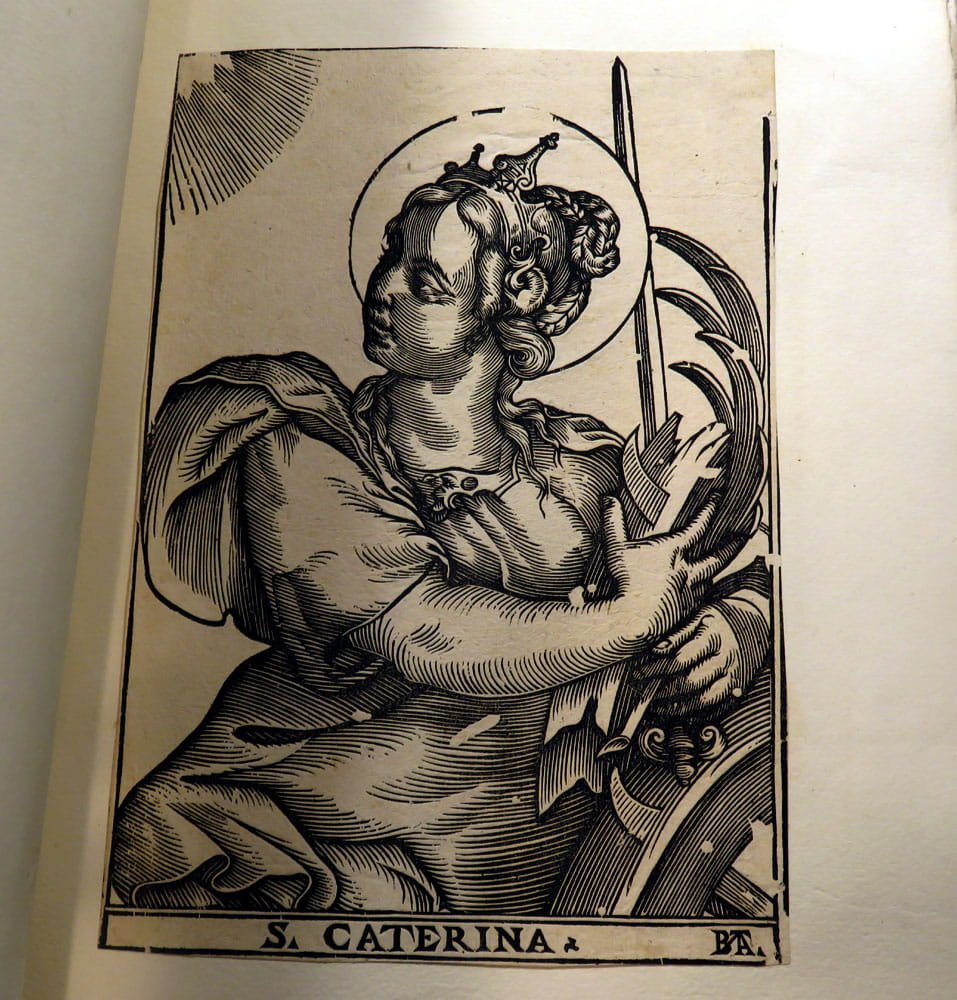
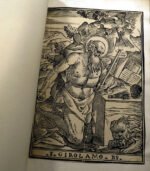
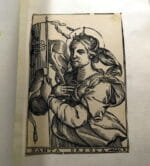
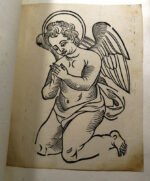
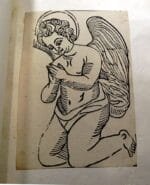
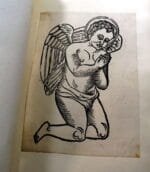
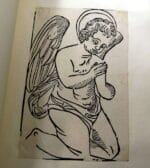
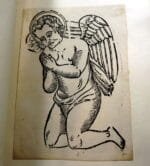
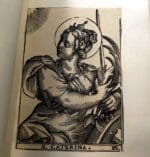
- The Milanese Hagiography (c. 1560): A cohesive suite of mid-16th-century North Italian woodcuts, including Saint Jerome in the Wilderness, Saint Catherine, and Saint Ursula, alongside a series of five adoring cherubs. These prints showcase the bold, rhythmic linework characteristic of the Counter-Reformation devotional style.
The Binding & Provenance:
Housed in an early-to-mid 19th-century limp vellum folio with a polychrome printed papered spine. This album was curated during the “Iconoclast” movement, where collectors salvaged masterpieces from damaged or “broken” early volumes to ensure their survival for future generations.
Housed in an early-to-mid 19th-century limp vellum folio with a polychrome printed papered spine. This album was curated during the “Iconoclast” movement, where collectors salvaged masterpieces from damaged or “broken” early volumes to ensure their survival for future generations.
Binder’s Note:
As a professional bookbinder, I have personally inspected this volume. Preserved in its original 19th-century sewing to maintain historical integrity. While the opening is tight, this ensures the album remains exactly as it was curated nearly 200 years ago. The vellum remains authentic and unrestored, bearing the honest patina of two centuries of stewardship.
As a professional bookbinder, I have personally inspected this volume. Preserved in its original 19th-century sewing to maintain historical integrity. While the opening is tight, this ensures the album remains exactly as it was curated nearly 200 years ago. The vellum remains authentic and unrestored, bearing the honest patina of two centuries of stewardship.
Why This Collection?
For the collector of Bibles and sacred texts, this album is more than a set of prints; it is a narrative of how the Word was visualized and preserved. It is a rare opportunity to own a pre-1500 Florentine masterpiece and a rare female-led Baroque work in a single, cohesive, and structurally sound binding.
For the collector of Bibles and sacred texts, this album is more than a set of prints; it is a narrative of how the Word was visualized and preserved. It is a rare opportunity to own a pre-1500 Florentine masterpiece and a rare female-led Baroque work in a single, cohesive, and structurally sound binding.
Technical Specifications
-
- Type: Antiquarian Collector’s Album (Iconoclast’s Folio).
- Dimensions: Folio; approximately 28.5 x 18cm (individual sheet sizes vary).
- Binding: Early-to-mid 19th-century limp vellum covers; polychrome printed papered spine.
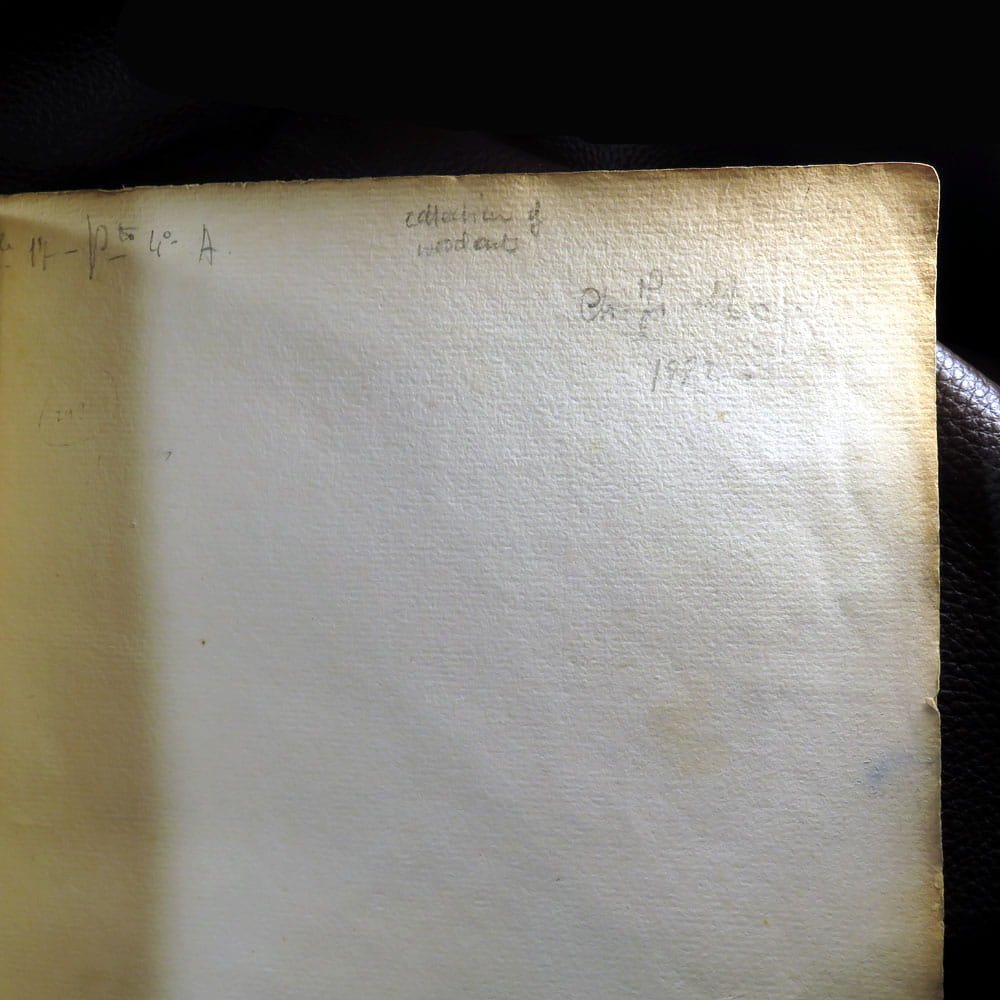
- Construction: 14 woodcuts, either “tipped-in” (adhered at corners) or pasted onto 19th-century heavy paper carrier leaves.
- Condition: Vellum shows authentic aging with minor foxing and inactive insect points. Interior woodcuts are largely stable; the 1486 Florentine leaf features stabilized historical repairs (closed tears) as is typical for its age.
- Place of Origin: Italy (principally Florence, Rome, and Milan).
- Date Range: 1486 – c. 1622.
Catalogue Summary of Woodcuts
| Subject / Title | Date / Origin | Artist / School | Notes | |
|---|---|---|---|---|
| 1 | Pope Gregory I Enthroned | 1486 | Florentine School | Incunabula. Title page from Morali di S. Gregorio. Features original red rubrication. |
| 2 | Moses & the Ten Commandments | c. 1600-22 | Geronima Parasole | Baroque masterpiece after Antonio Tempesta. Signed “P.M.F.” (Parasole Manu Fecit). |
| 3 | Saint Jerome in the Wilderness | c. 1560 | North Italian | Depicted with lion and skull. Inscribed “S. GIROLAMO BS.” |
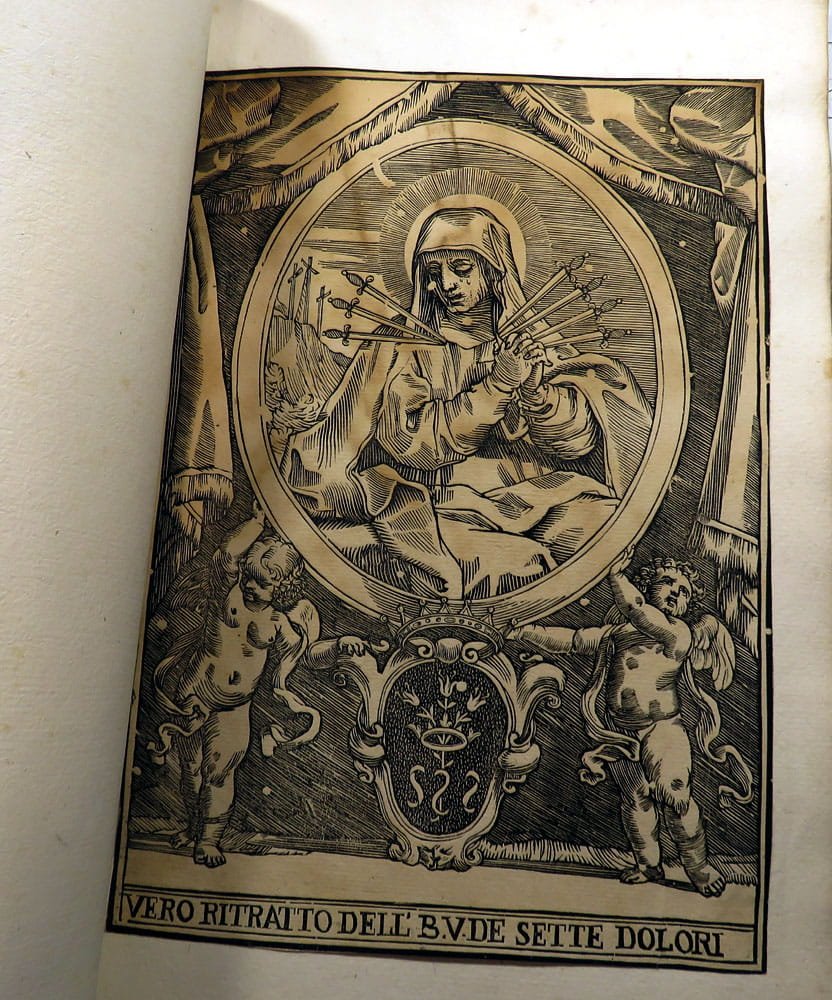
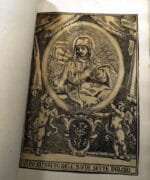
| 4 | The Seven Sorrows of Mary | c. 1560 | Milanese School | Tondo format flanked by cherubs. Inscribed “Vero Ritratto dell’ B.V. de Sette Dolori.” |
| 5 | Saint Ursula | c. 1560 | North Italian | Depicted with crown, palm, and banner. Monogrammed “B.” |
| 6 | Saint Catherine of Alexandria | c. 1560 | North Italian | Features spiked wheel and sword. Monogrammed “BA.” |
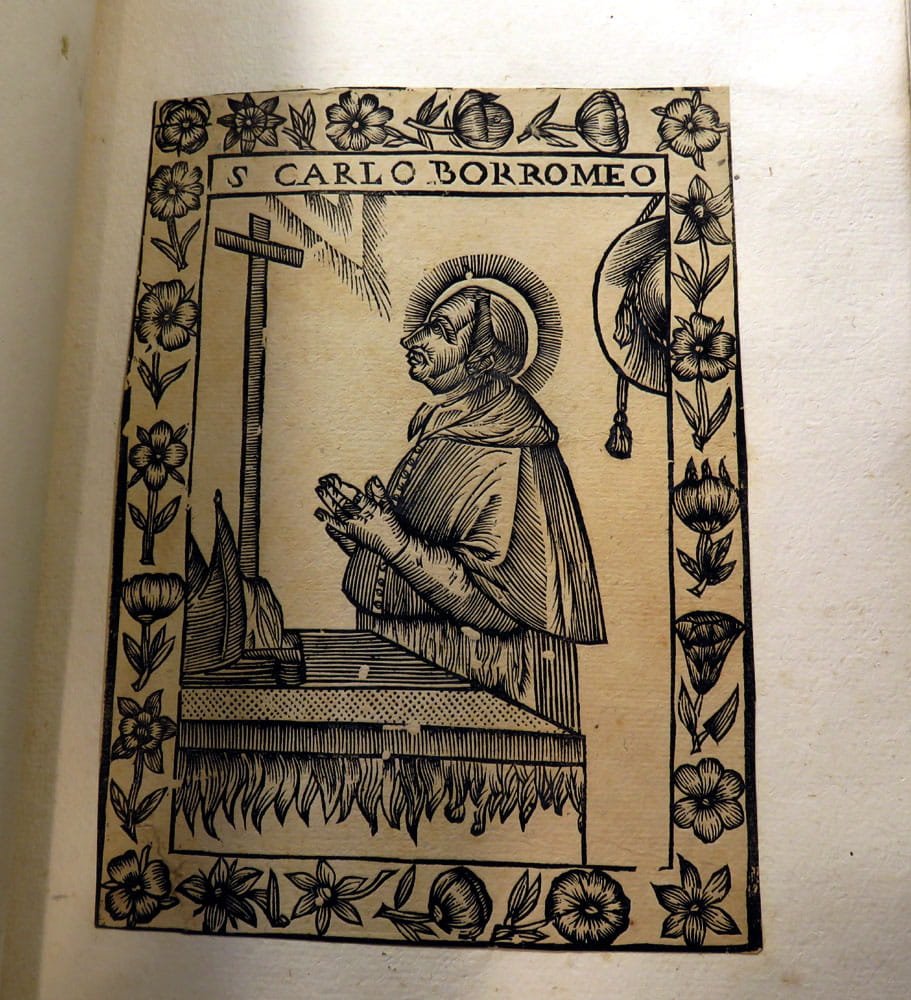
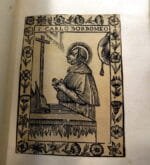
| 7 | Saint Charles Borromeo | c. 1610 | Milanese School | Post-canonization devotional print showing the Saint at prayer. |
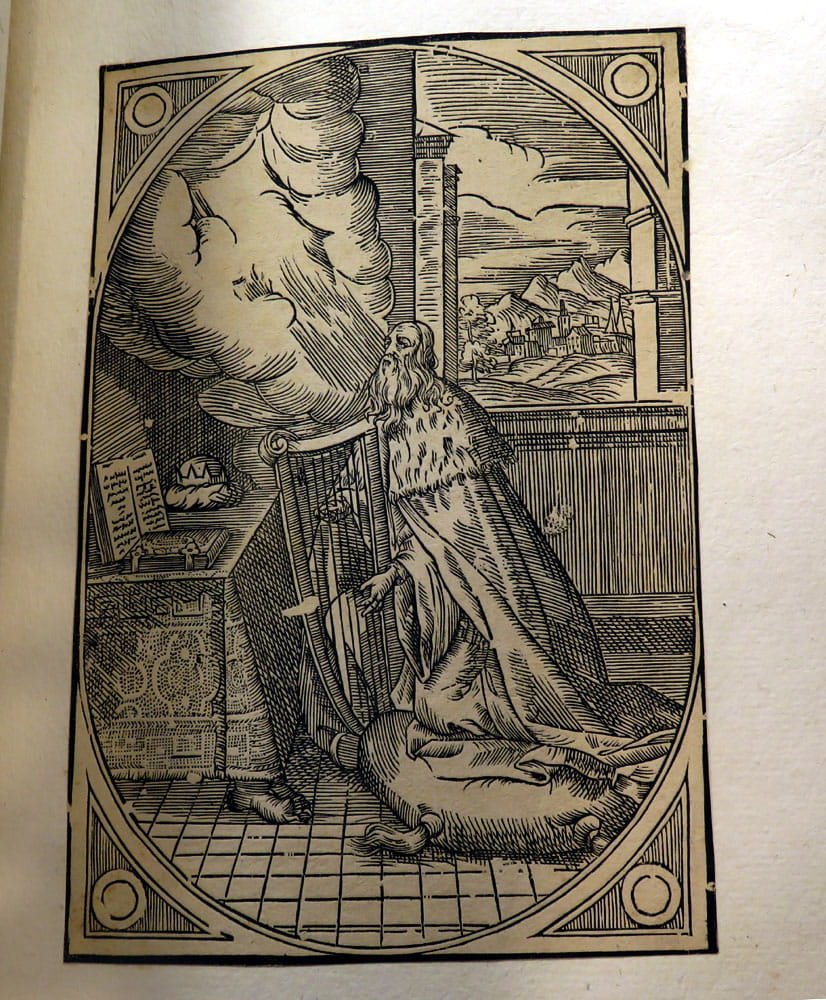
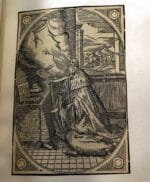
| 8 | King David with Harp | c. 1580 | North Italian | Narrative scene of penitence within an architectural oval frame. |
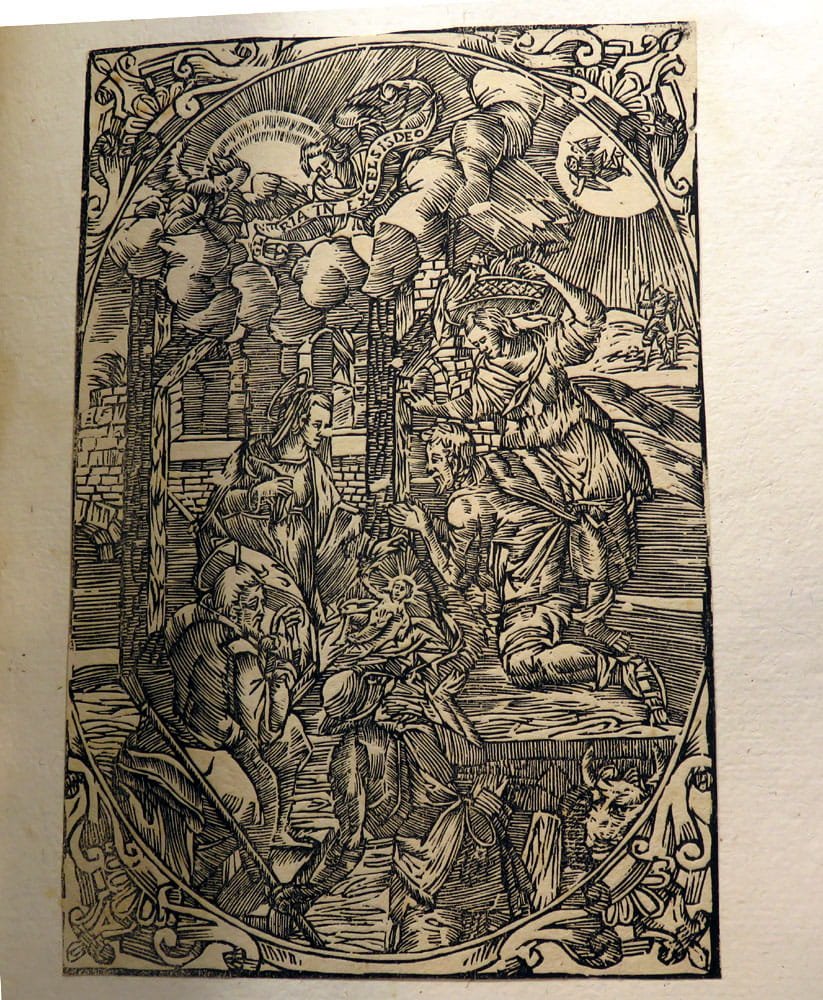
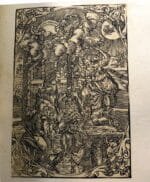
| 9 | Adoration of the Shepherds | c. 1560-80 | North Italian | Large-scale multi-figure scene with elaborate Mannerist border. |
| 10-14 | Series of Adoring Cherubs | c. 1560 | North Italian | Five distinct woodcuts of kneeling angels, mirrored and varied, likely once flanking a central altar scene. |
The Value Proposition
This album represents a time capsule of Renaissance devotion. For the Bible scholar or art collector, it offers a rare physical link to the earliest days of Christian printing. The inclusion of a signed work by Geronima Parasole—one of history’s few celebrated female woodblock cutters—makes this a high-priority acquisition for institutional or private collections focusing on the diversity of art history.
Additional information
| Weight | 1 lbs |
|---|---|
| Dimensions | 18 × 11 × 2 in |
Reviews (0)
You must be logged in to post a review.
Shipping and Delivery


Bible Condition Guide

At-a-glance Condition Guide
Standard condition grades used for antiquarian Bibles.
| Grade | Short definition | Key signs to look for | Typical use / value |
|---|---|---|---|
| Fine (F) | Virtually as issued; near‑new for its age. | Tight, original binding; clean, unmarked pages; original leather or cloth intact; minimal shelf wear. | Collector quality; commands the highest premium. |
| Very Good (VG) | Light signs of use but well cared for. | Minor rubbing at edges; small scuffs; sound binding; complete text and plates/maps present. | Collectible; desirable but lower premium than Fine. |
| Good (G) | Clearly used; moderate wear and handling signs. | Fading or spine rubbing; light foxing or inscriptions; small tears; structurally sound. | Solid reading copy; modest market value. |
| Fair | Worn but generally complete text block. | Heavy wear to boards; loose hinges; missing endpapers or half‑title; soiling or repairs needed. | Low value; suitable for restoration or rebinding. |
| Poor / Reading Copy | Heavily damaged; often only the text remains usable. | Detached covers; missing pages; severe water/mold damage; heavy foxing or staining. | Reference or restoration only; minimal market value unless content is exceptionally rare. |
Note: Binding condition (original, rebacked, or binding copy) and presence of plates, maps, or family registers significantly affect value. Please look at all photos and read the entire description when evaluating a listing.
Reviews
Clear filtersThere are no reviews yet.