

A Bible From 1280: Four Original Leaves, Ready for Your Wall

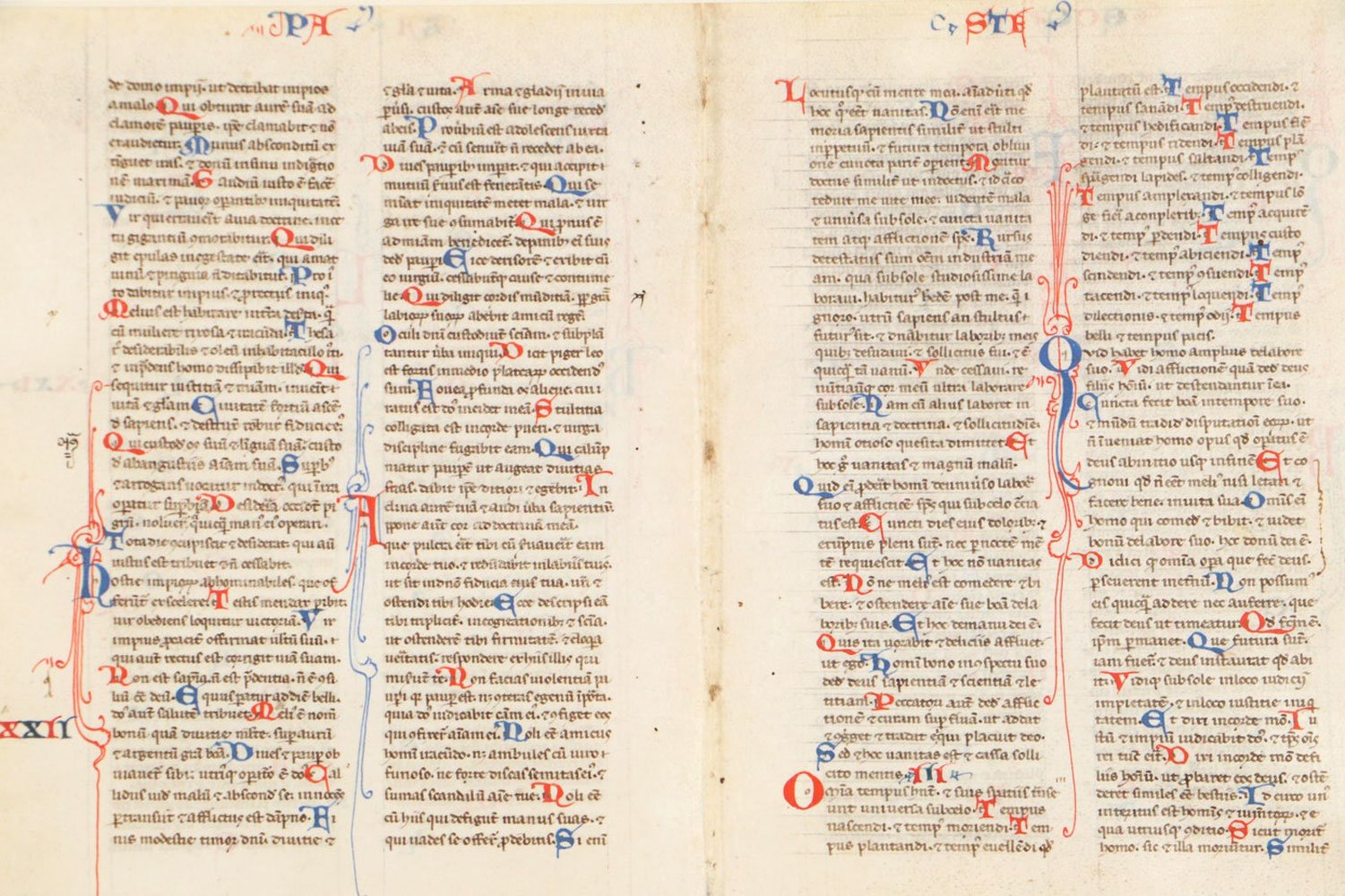
There are antiques that survive by luck, and objects that survive by craft. A thirteenth-century Italian Bible sits firmly in the second group — and we hold one of its original leaves.
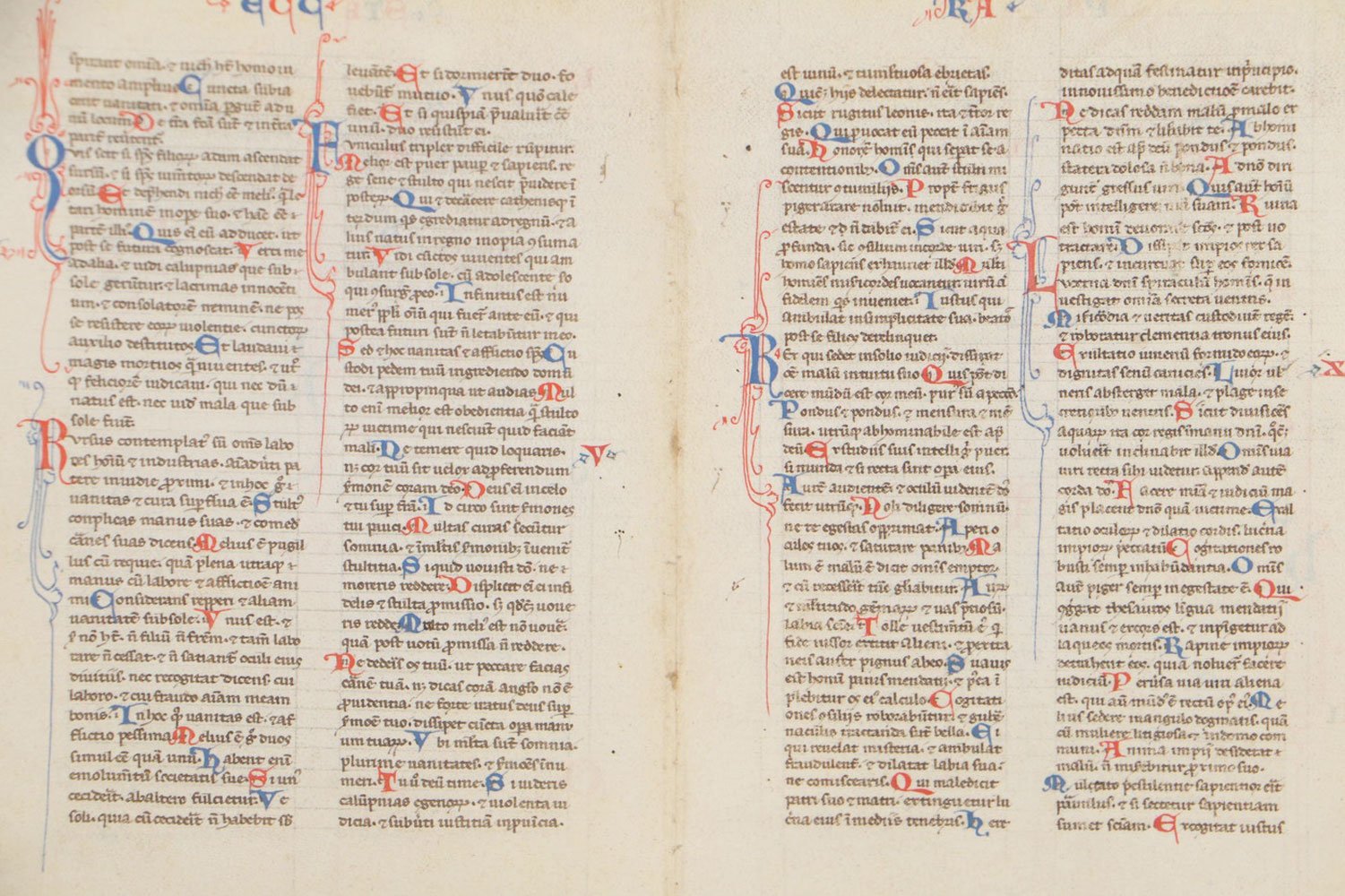
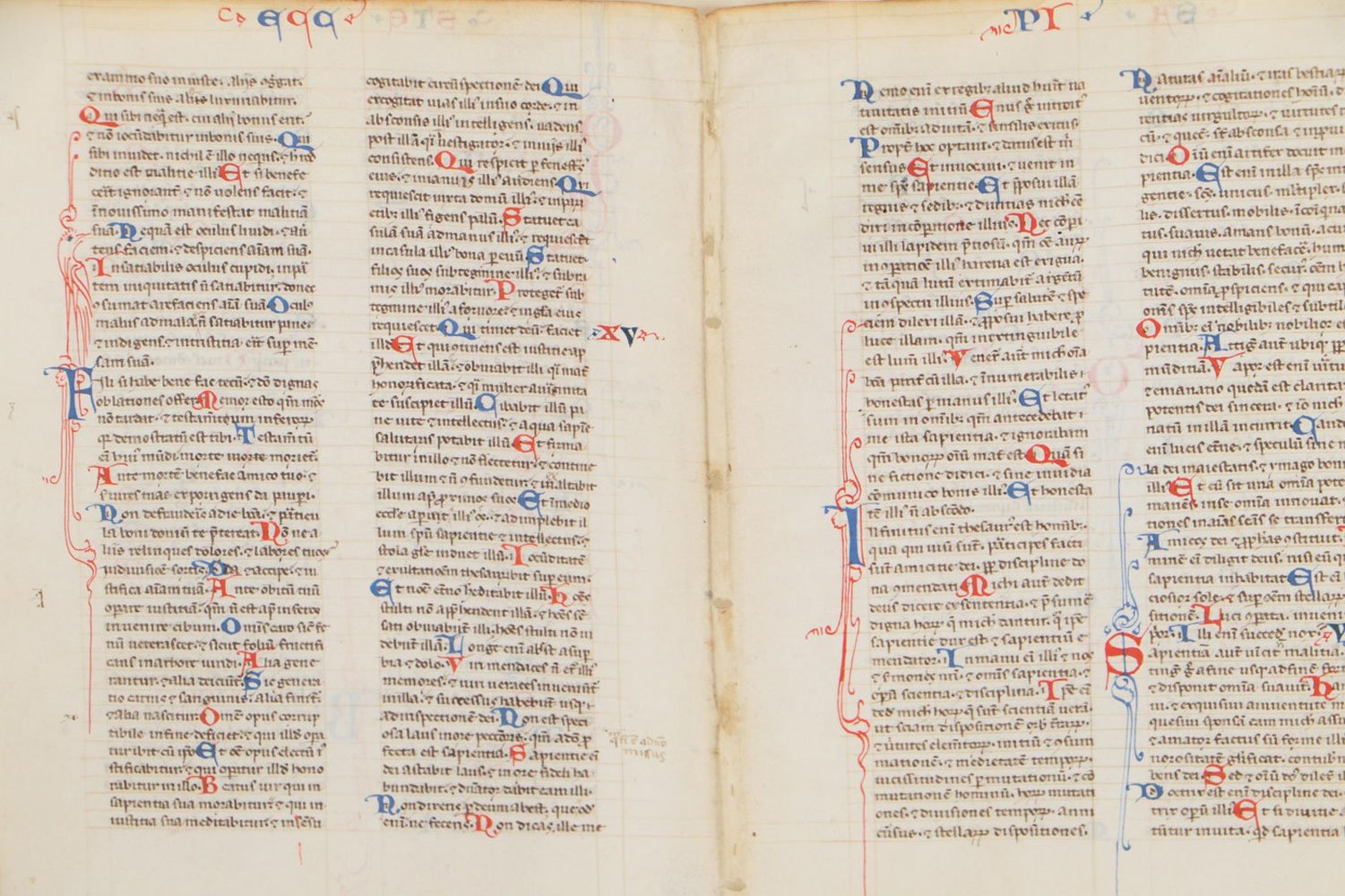
Written around 1280, in a time when a single page could take a skilled scribe a week, this book was made to outlast everyone who ever opened it. The scribe set the text in Gothic textura — the dense, stone-cut script that gives medieval Bibles their carved appearance — in iron gall ink that has outlived the frames it was once bound in. Rubricators added the red; gilders finished the decorated initials in laid gold leaf.
What you are actually holding
Four original vellum leaves (folios) from one single book. Not a reproduction. Not a facsimile printed onto vellum. The actual pages of a real thirteenth-century Bible — their ink, their gold, their seven centuries of wear — made more than a hundred years before the printing press changed everything.
The craft, leaf by leaf
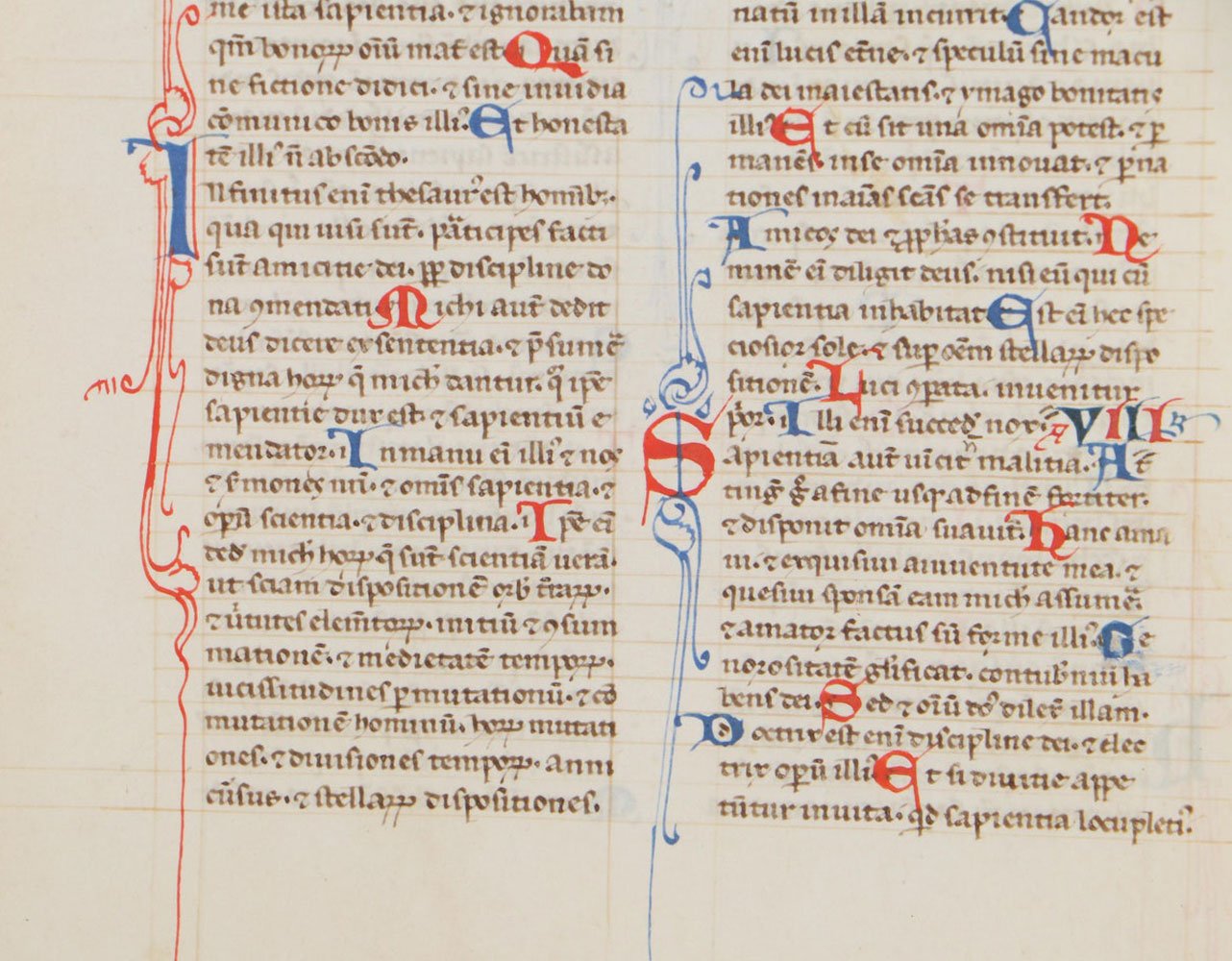
- Vellum — prepared by hand, still supple after roughly 745 years.
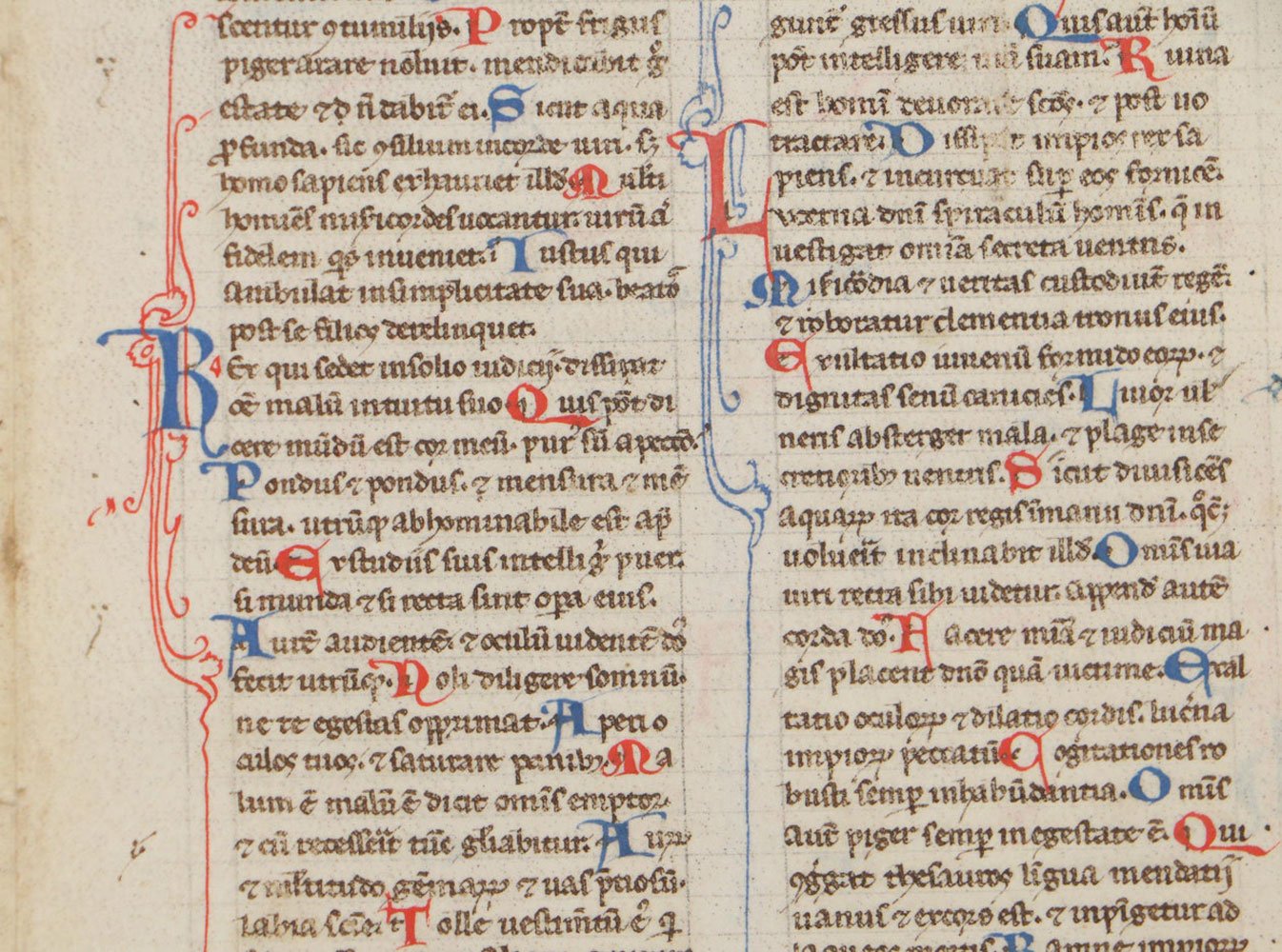
- Gothic pearl script — the standard book hand of the high medieval period.
- Red rubrication — chapter marks, lection headings, and liturgical guides in the scribe’s own hand.
- Gold-leaf illuminated initials — burnished and raised, the signature work of a master miniaturist.
Made to be displayed
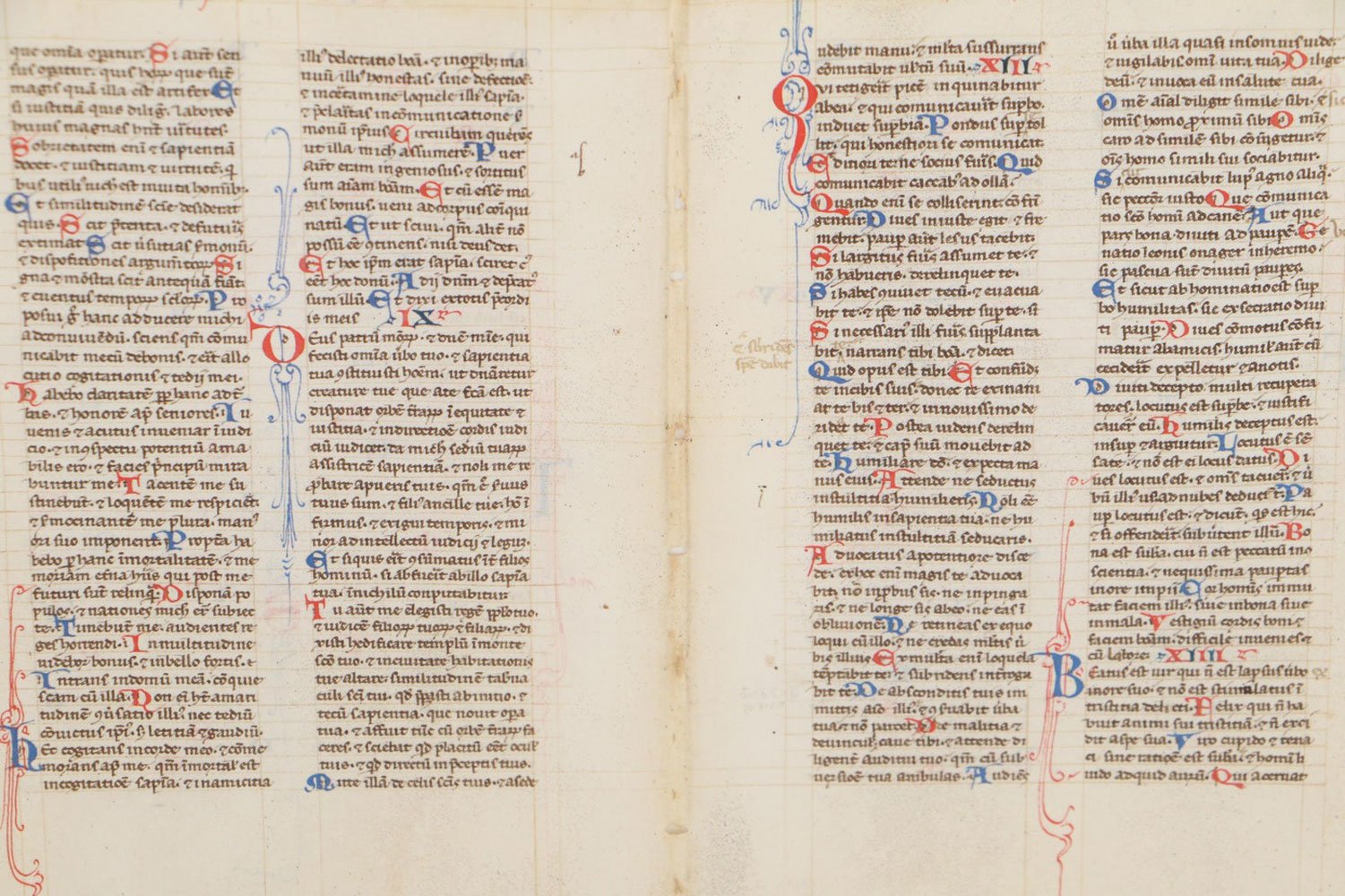
Conserved, stabilized, and ready to display now — float-mount it in a frame and hang it. This is a piece you do not shelve; it is a piece you read, line by line, every time you walk past it.
Watch the full close-up walkthrough on our YouTube channel, and find it at BibleBulldog.com.